Dangerous pest or your next pesto? The soil-poisoning weed you can eat

Bad for the environment, but great for your dinner plate?
It may not look like plants are doing much this early in the season, but things are starting to sprout. Unfortunately, not all of Canada's spring blooms are good for the environment.
One of those plants is garlic mustard, an invasive and 'aggressive forest invader' that's overtaking green spaces.
Garlic mustard sightings have been steadily increasing on iNaturalist, with sprouts already observed in parts of southern Ontario and B.C.
But it won't be long before it starts growing elsewhere in Canada -- in addition to B.C. and Ontario, its invasive range extends to all Maritime provinces and Alberta.
In its first year of growth, the plant is fairly inconspicuous. But by the second year, it can grow up to a metre high, posing a significant threat to surrounding biodiversity.
You might come across it in your neighbourhood. It's especially noticeable in April and May, when it starts producing white flowers.
Poisons soil, threatens species
Garlic mustard threatens several native species, the Government of Ontario says on its website, including American ginseng, drooping trillium, false rue-anemone, hoary mountain mint, white wood aster, wild hyacinth, and wood poppy.
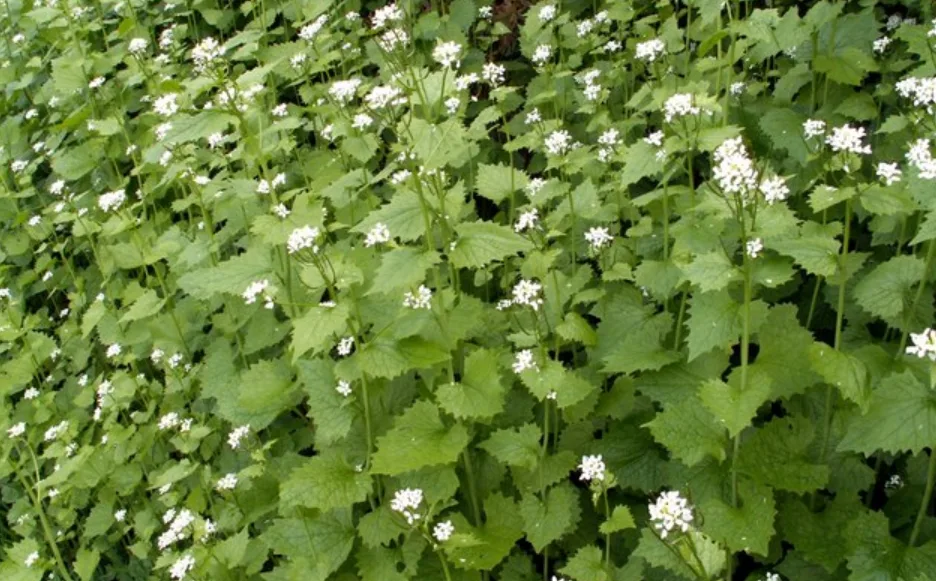
Crushed leaves give off a distinct garlic smell. (John Fielding / "Jack-by-the-hedge" or Garlic Mustard / CC BY-SA 2.0)
It spreads quickly and its roots produce chemicals that change soil chemistry, preventing the growth of other foliage. Those chemicals also deter herbivores that would otherwise eat the plant and help control its population.
It can also spread viruses that impact important crops like cucumber, due to its fast spread.
Its seeds are persistent, with the ability to remain in the soil for 5 to 10 years.
"In ideal conditions, plants can produce up to 150 seed pods, with up to 22 seeds per pod," the Ontario Invasive Plant Council says in a report.
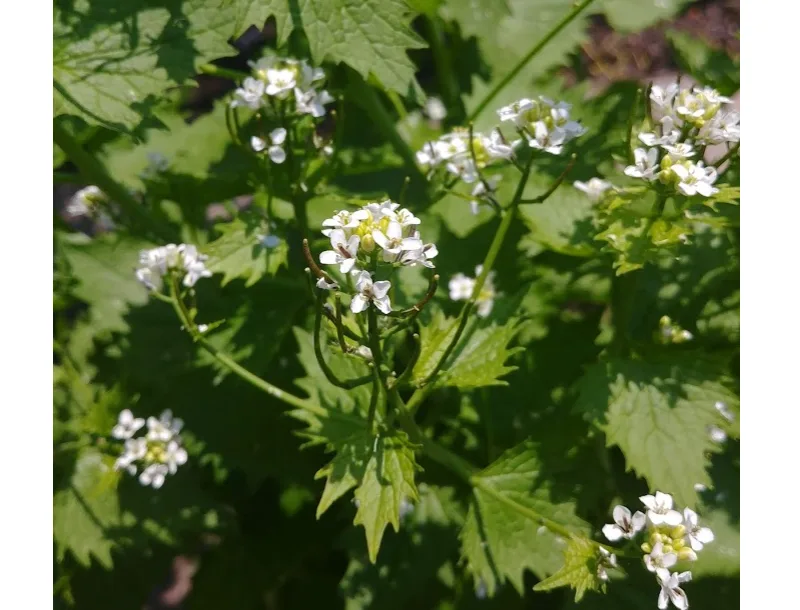
Garlic mustard can be visually identified by its dainty white flowers and triangular, jagged leaves (Cheryl Santa Maria/submitted)
"In one study, a dense population of garlic mustard produced over 105,000 seeds per square metre. Most seeds are dropped within 1-2 metres of the parent plants."
Just eat it?
Garlic mustard was intentionally brought to North America by European settlers in the 1800s.
Local foraging groups encourage curbing the plant's spread by eating it. Like the name suggests its crushed leaves have a distinct, garlicky smell and light, garlicky taste, and there are recipes online for garlic mustard pestos, or instructions on how to prepare it as a sauteed dish.
Just make sure you know where you're foraging. Plants on public property may have been treated with pesticides that make them unsafe for consumption. But if you find garlic mustard on private property, it's likely safe to eat.
According to a 2015 report written for the CBC by Jonathan Pinto, it can replace basil to make a "really delicious" pesto. Garlic mustard is also nutritious, with high concentrations of vitamins A and C.
But be careful when foraging because there are some lookalikes lurking about.
When you're identifying the second-year plant, keep an eye out for a lookalike called being dame's rocket, which grows to a similar height and can be found in similar areas.
Key differences include are the colour of the flowers (dame's rocket flowers tend to be varying shades of purple while garlic mustard produces white flowers), and the shape of the leaves. Dame's rocket leaves tend to be elongated and narrow, while garlic mustard leaves are triangular and jagged.

Dame's rocket (pictured above) resembles garlic mustard, but its flowers range in colour from light to dark purple. (Huw Williams/Wikipedia/Public domain.)
One thing to note: If you do accidentally forage dame's rocket, you won't be putting yourself in danger. It is considered safe to eat, with a flavour comparable to arugula.
Other ways to get rid of garlic mustard
If you aren't interested in eating garlic mustard here are some other ways to help control the population, courtesy of Ontario.ca:
Reference the Landowner’s Guide to Controlling Invasive Woodland Plants to learn how to identify and manage invasive plants.
Do not intentionally plant invasive species on your property.
Dispose of invasive plants in the garbage, but do not put them in compost bins or throw them in natural areas, as flowers may spread seeds.
You can prevent the spread of invasive plants when hiking by keeping pets leashed and remaining on trails.
If you’ve seen garlic mustard or any other invasive species in the wild, contact the Invading Species Hotline at 1-800-563-7711. You can also report sightings online.
WATCH BELOW: What makes a plant 'invasive', and how much harm can they do?
Editor's note: This article was originally published in May 2021 and updated with current information in April 2026.