How this university is preventing invasive spongy moths from spreading

Invasive spongy moths cause billions of dollars in damage annually. The Weather Network met with Richard Hamelin as he unveils a new technology that creates a DNA fingerprint to trace the origin of these pests, providing a crucial defence for Canada's vital ecosystems.
The Weather Network had a chance to visit Richard Hamelin's lab at the University of British Columbia (UBC) to see a new genomic tool that aims to help stop the Asian spongy moth (Lymantria dispar asiatica) from making its way to B.C.’s forests.
Back in 2020, the European subspecies caused record-breaking defoliation in Eastern Canada, damaging 583,157 hectares of forest in Ontario.
While the European spongy moth has already established itself in North America, researchers are hoping to make sure the species aren’t able to enter the country.
They can be even more destructive, because unlike the European spongy moth, the Asian female spongy moth can fly up to 25 kilometres They also have a much larger diet.
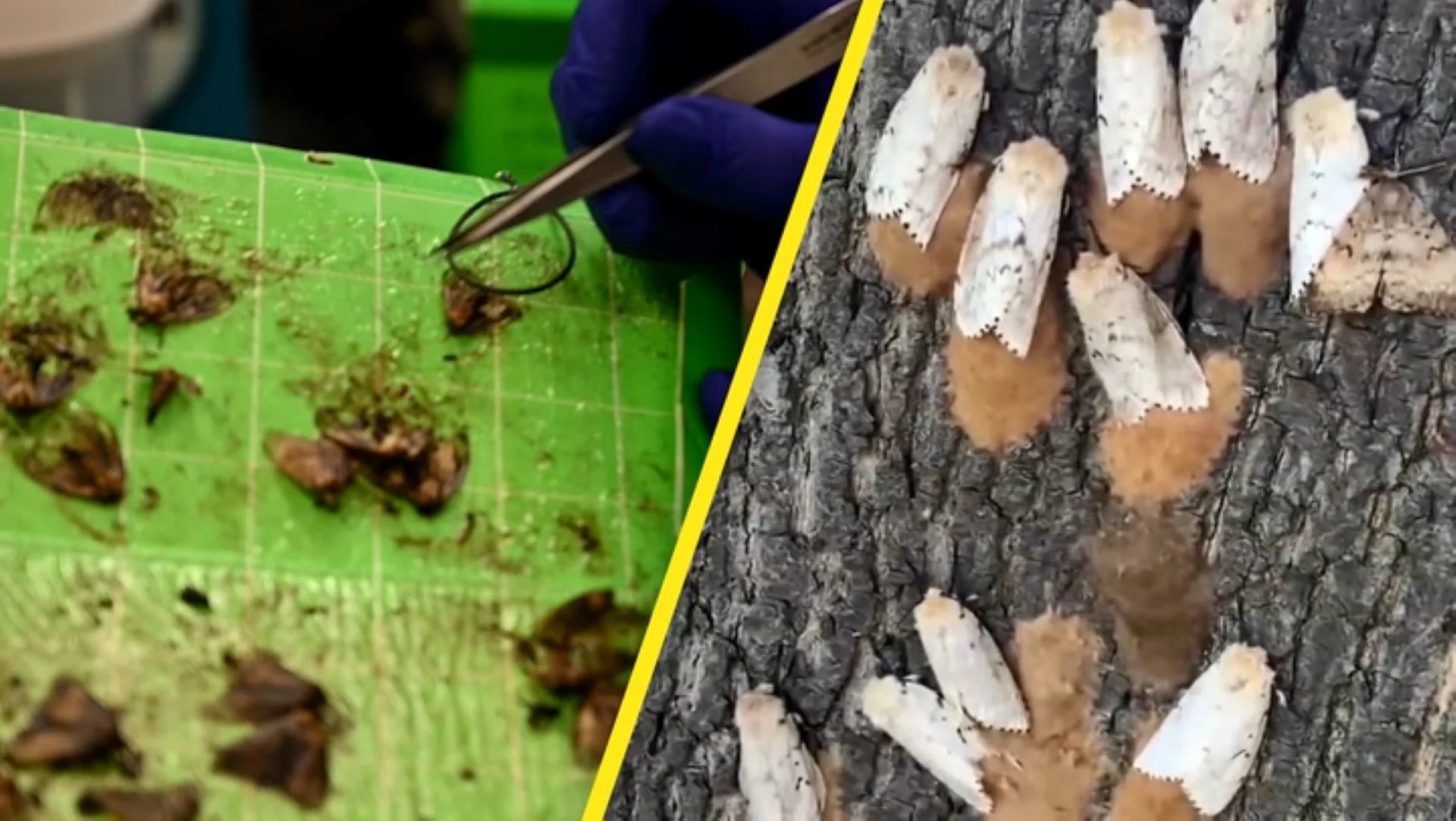
(Mia Gordon/The Weather Network (left image) and Amanda Weldon (right image).
So, this tool known as the SpongySeq can analyze moth DNA. Researchers take a sample from the moths that hitch a ride on cargo ships and create a fingerprint.
That DNA is then used to track where the moth came from, allowing officials to eradicate them if they are the Asian version of the moth.
The next step is to produce a more mobile version of the SpongySeq. Researchers are also hoping the same genomic approach can be adapted to track other invasive species.
Thumbnail image: Left image courtesy of Mia Gordon/The Weather Network, and the right image courtesy of Amanda Weldon.