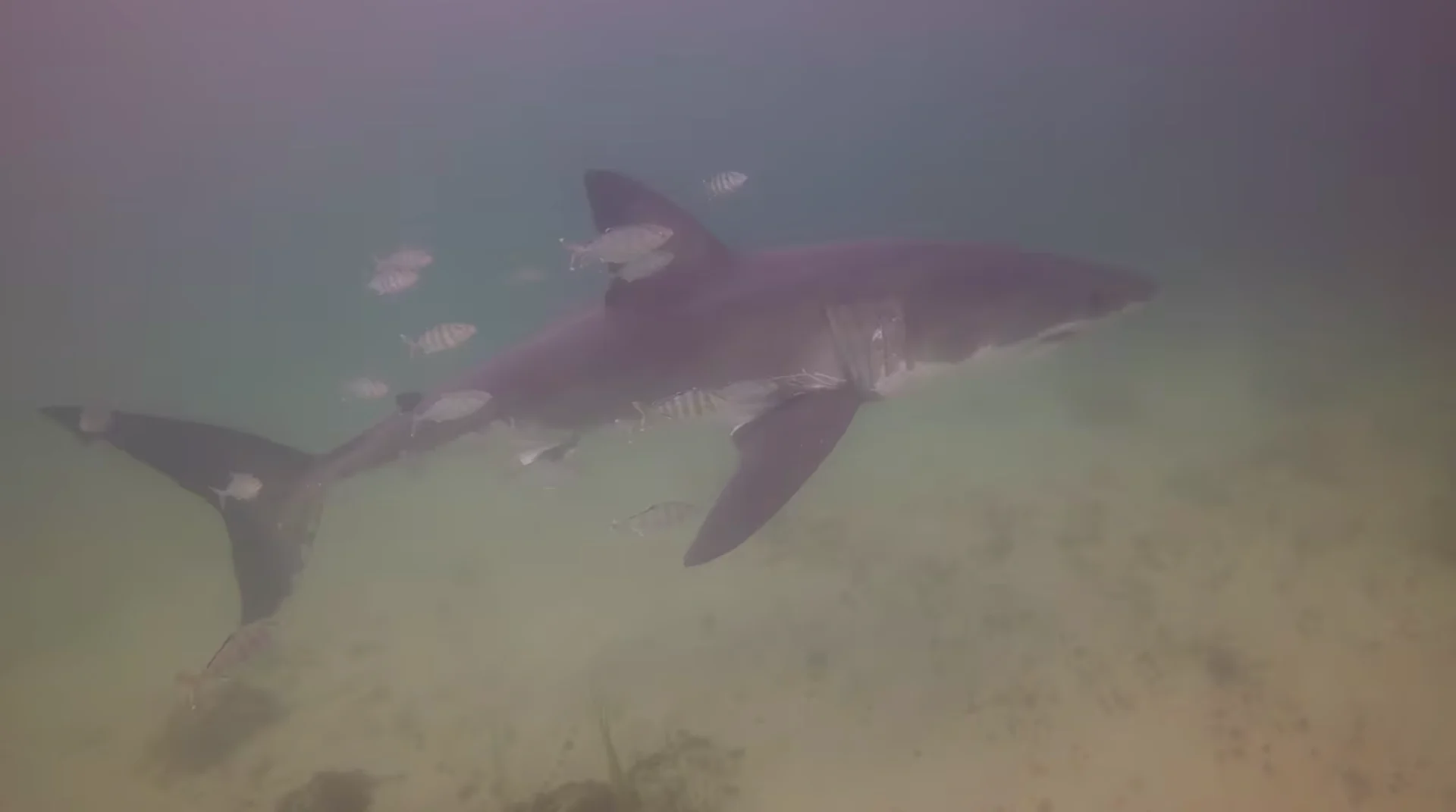
Diver injured in great white shark attack off Quebec's Gaspé coast

A diver was transported to hospital after being injured by a great white shark in Percé, Que., in the province’s Gaspé region.
According to the Canadian Coast Guard, the incident occurred shortly before 10:30 a.m. on Wednesday.
“Emergency response measures were initiated immediately,” Plongée Percé, a commercial diving firm, said in a Facebook post Wednesday.
“The individual involved received first aid on site before being quickly transported to hospital for further evaluation. We have confirmation that their life is not in danger.”
SEE ALSO: First transmissible cancer found in freshwater fish in Canada-U.S. lake
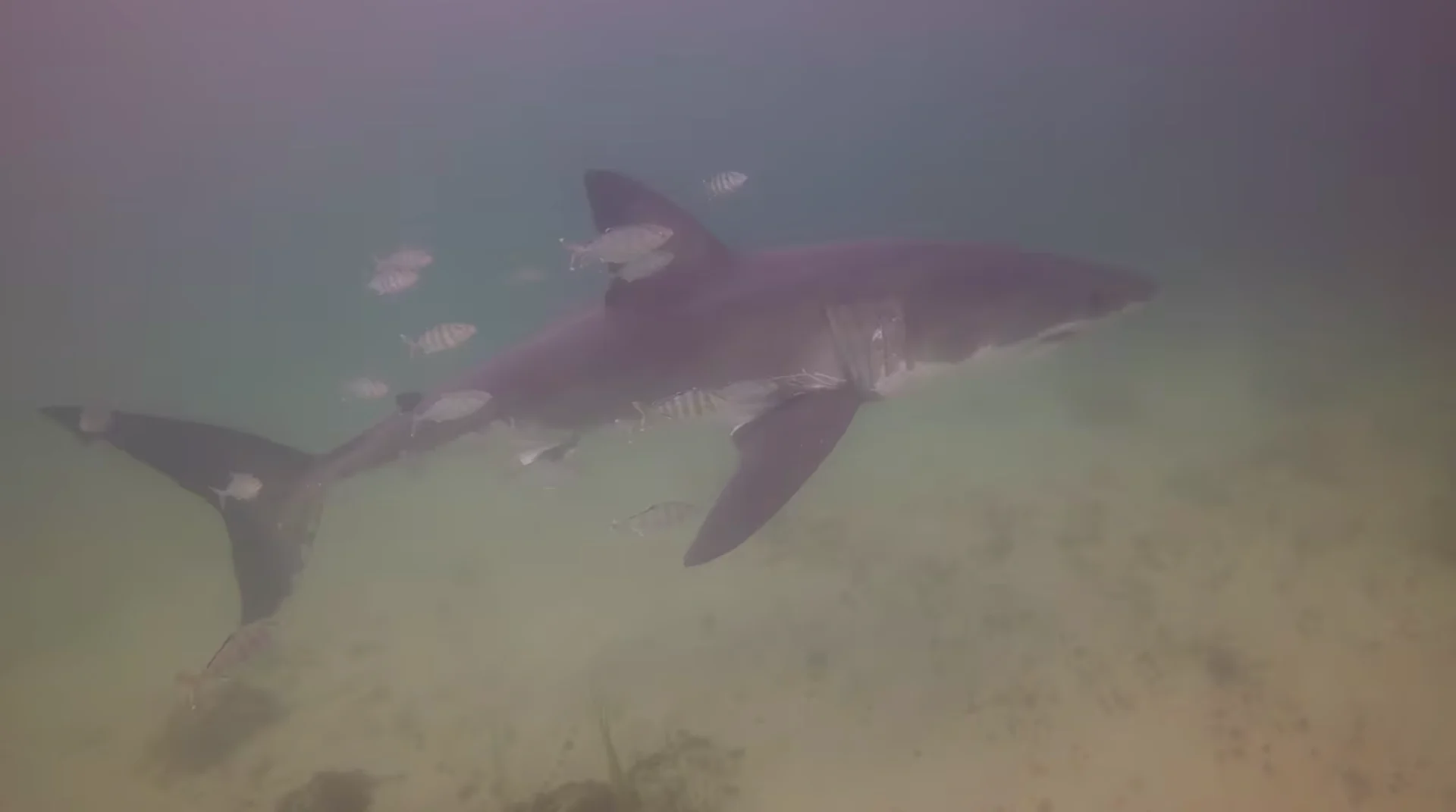
According to the Canadian Shark Attack Registry, 15 confirmed shark-related incidents have been recorded in Canada over more than 330 years. (Kirk Yang via CBC News)
The Canadian Coast Guard confirms the victim was aboard the vessel Yoda, a Canadian Coast Guard Auxiliary dive boat. As of Wednesday afternoon, the organization was unable to confirm the nature of the victim’s injuries.
Kevin Dubé, a boat captain, witnessed the scene. He said a mayday call came in saying something had happened to a diver. The injured person was brought ashore in a dinghy, he said.
"The ambulances were already there. It all happened very, very quickly. They took charge of him and transported him to hospital," Dubé said.
On Facebook, Plongée Percé thanked those who helped with the rescue and said it was suspending diving activities for the rest of the season.
Increase in great white sightings
Over the summer, great white shark sightings became more frequent in the Gulf of St. Lawrence and off the coasts of the Gaspé Peninsula and the Magdalen Islands.
Four of these sharks — Webster, Ernst, Bella and Nori — are being tracked by Ocearch, a global non-profit organization that helps scientists study sharks. Nori was spotted south of Anticosti Island, while Ernst and Bella are swimming northeast of the Magdalen Islands.
The organization told CBC News in August that the sighting of Webster off the coast of Newfoundland and Labrador was a sign of a healing ocean. Webster is a 12-foot shark weighing just over 1,000 pounds.
Ocearch founder Chris Fischer said the population of great white sharks was nearly decimated from the 1970s to the 1990s. He said only around nine per cent of the global population remained before efforts were made to protect the remaining population.
Having sharks in the region is a good sign for local fisheries, he said, as sharks instinctively put pressure on seals and ultimately protect fish stocks.
Caroline Miri, a marine biologist with Fisheries and Oceans Canada, said sharks play a key role at the top of the marine food chain.
“They're very important to the health and stability of our oceans and marine ecosystems because these sharks help keep in check some populations of invasive species, and they also control competing fish species lower down on the food chain,” Miri said.
Fischer said Ocearch has tagged around 115 sharks across the Atlantic, from Florida to Newfoundland and Labrador.
Sharks drawn by seals
According to the St. Lawrence Shark Observatory, the recent increase in sightings of great white sharks in the gulf is mainly due to better documentation and a recovery of the species, which was considered endangered in Canadian waters.
Great white sharks have become regular seasonal visitors to the gulf and the Canadian Atlantic, particularly in areas with large grey seal populations.
"We see lots of seals. Hundreds of them. It's the breeding season," said boat captain Dubé.
Sandra Gauthier, director of the Exploramer science museum in Sainte-Anne-des-Monts, Que., said this type of incident was inevitable with the increase in sharks in the waters of the gulf.
"I don't think we should be worried, but it's still a wild animal and if we go into its habitat, the risks of encountering it are greater," she said.
"We've never done this in Canada, learned to live with sharks, but that's the lesson we're learning today. Elsewhere, there are sharks and people are used to them. There are very few attacks. Worldwide, we're talking about fewer than 12 per year."
According to the Canadian Shark Attack Registry, 15 confirmed shark-related incidents have been recorded in Canada over more than 330 years.
Written by Isaac Olson, with files from Radio-Canada, for CBC News.