Record-low ice: Can the polar vortex save Hudson Bay bears?

The alarming trend of record-low sea ice in Hudson Bay has dire consequences for polar bears, who are fasting on land and waiting for the ice to form so they can hunt
After one of the warmest Novembers on record across Northern Canada, Hudson Bay, the seasonal lifeline for polar bears, has remained unusually ice-free.
Now, attention is on the polar vortex, as the first true surge of bitterly cold Arctic air finally pushes south this week.
SEE ALSO: New study points to more polar bear troubles from climate change
Record warmth set the stage
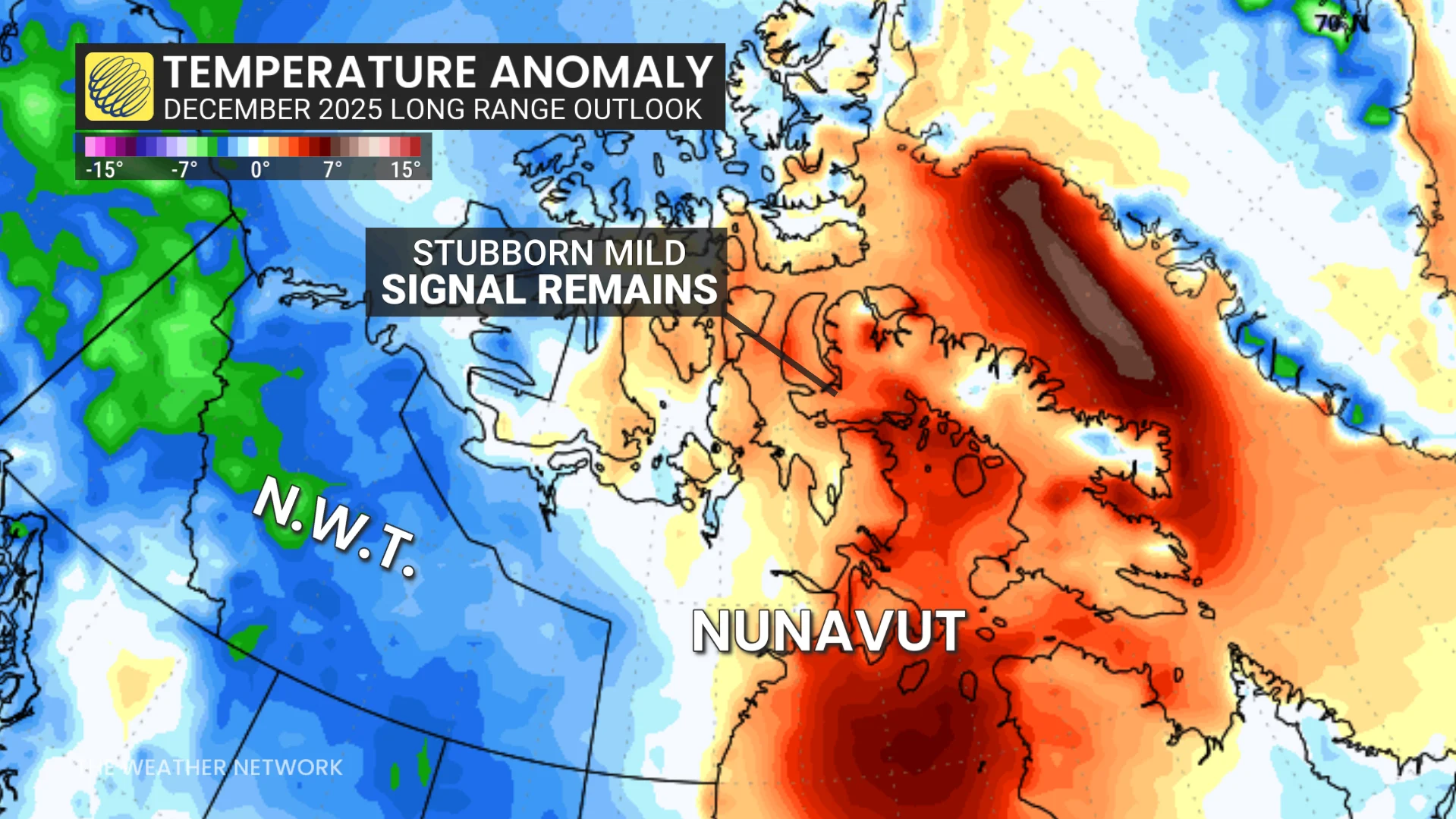
November 2025 brought widespread +10°C temperature anomalies across Nunavut
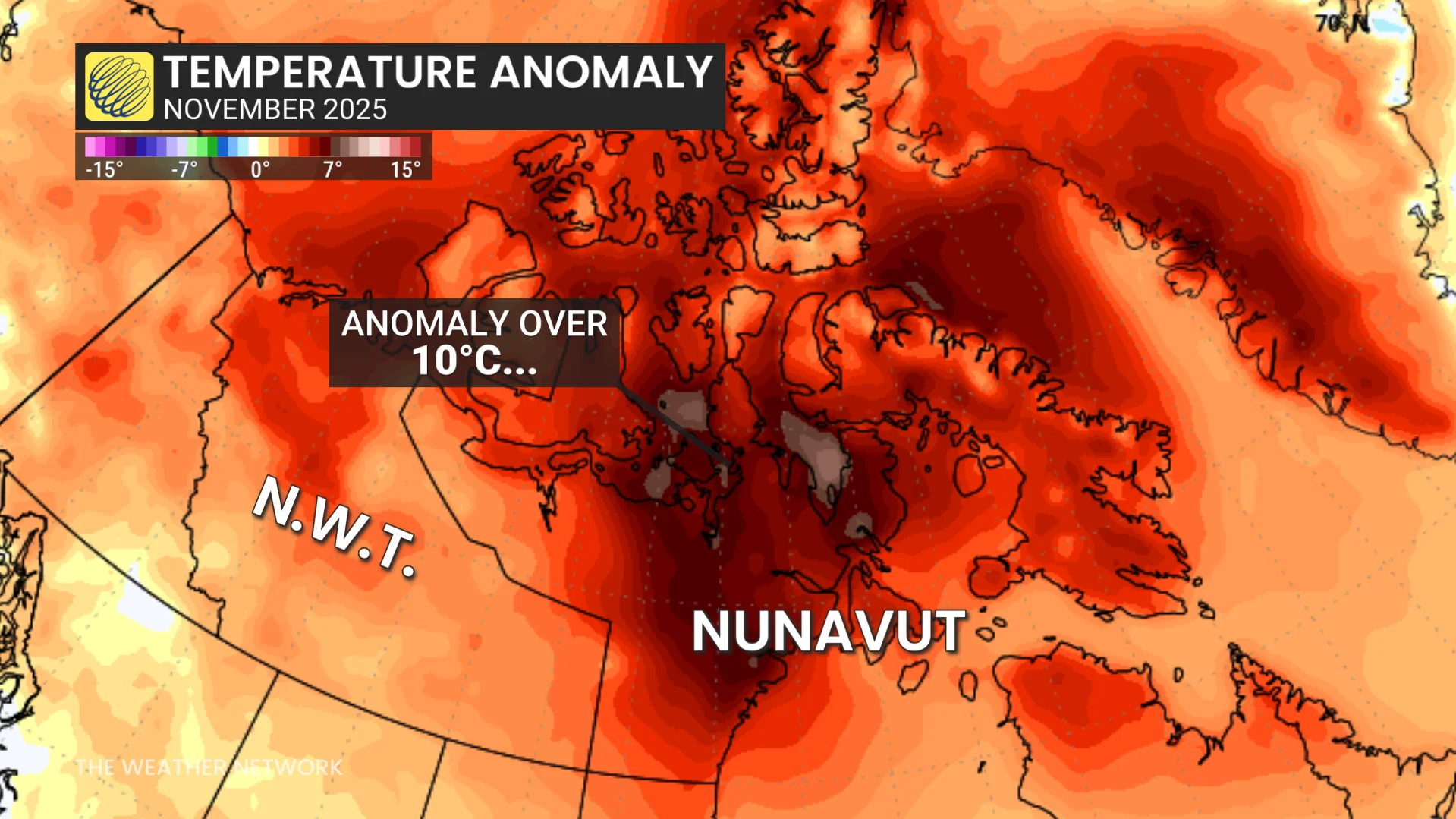
The cold Arctic air never arrived, which normally kick-starts sea ice formation
The result: Hudson Bay entered December with a historically delayed freeze-up.
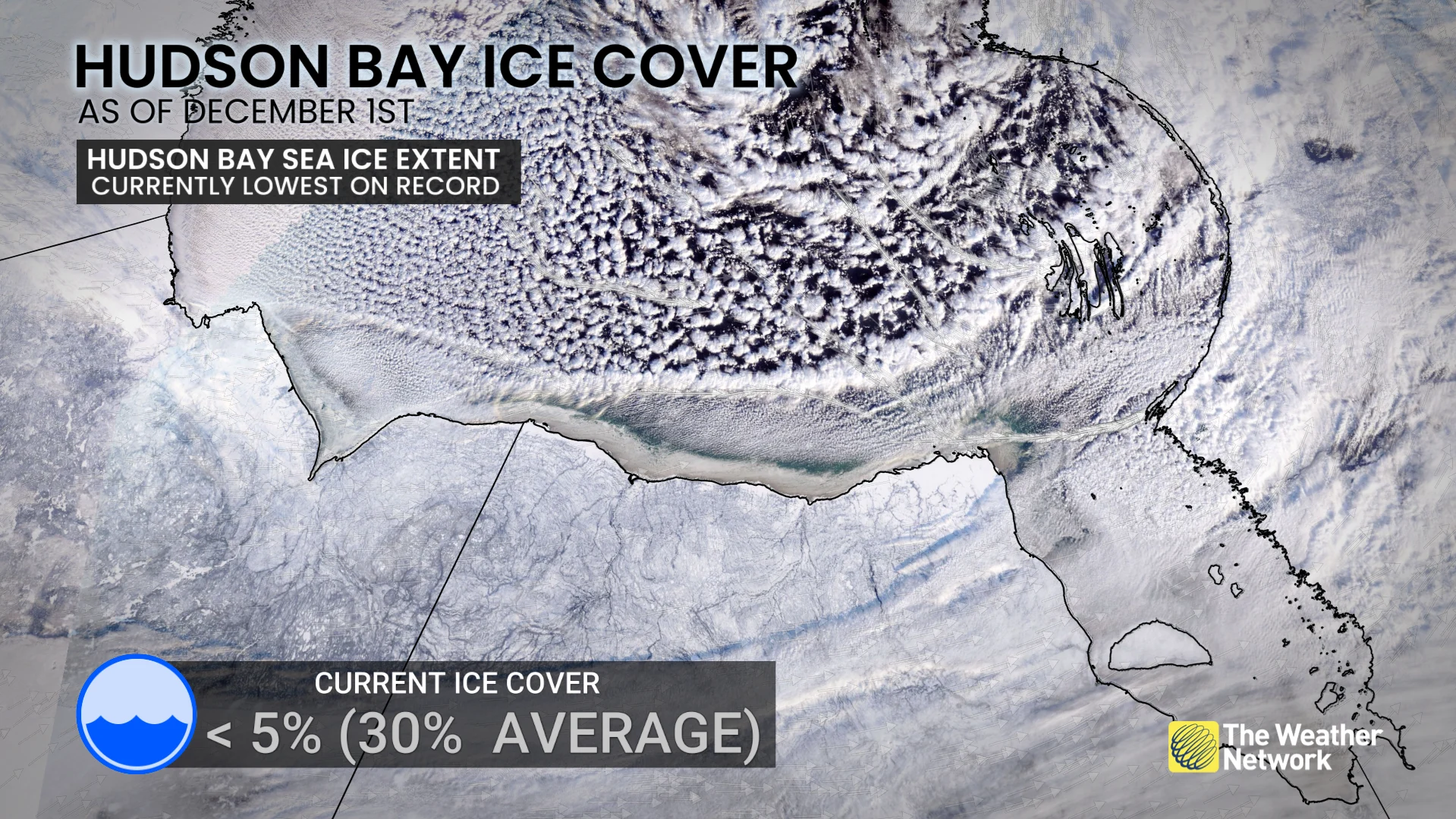
Hudson Bay ice on life support
Current ice cover: Less than five per cent.
Dec. 1 average: Approximately 30 per cent.
Status: Lowest, early-December ice extent on record.
And, it’s not just Hudson Bay.
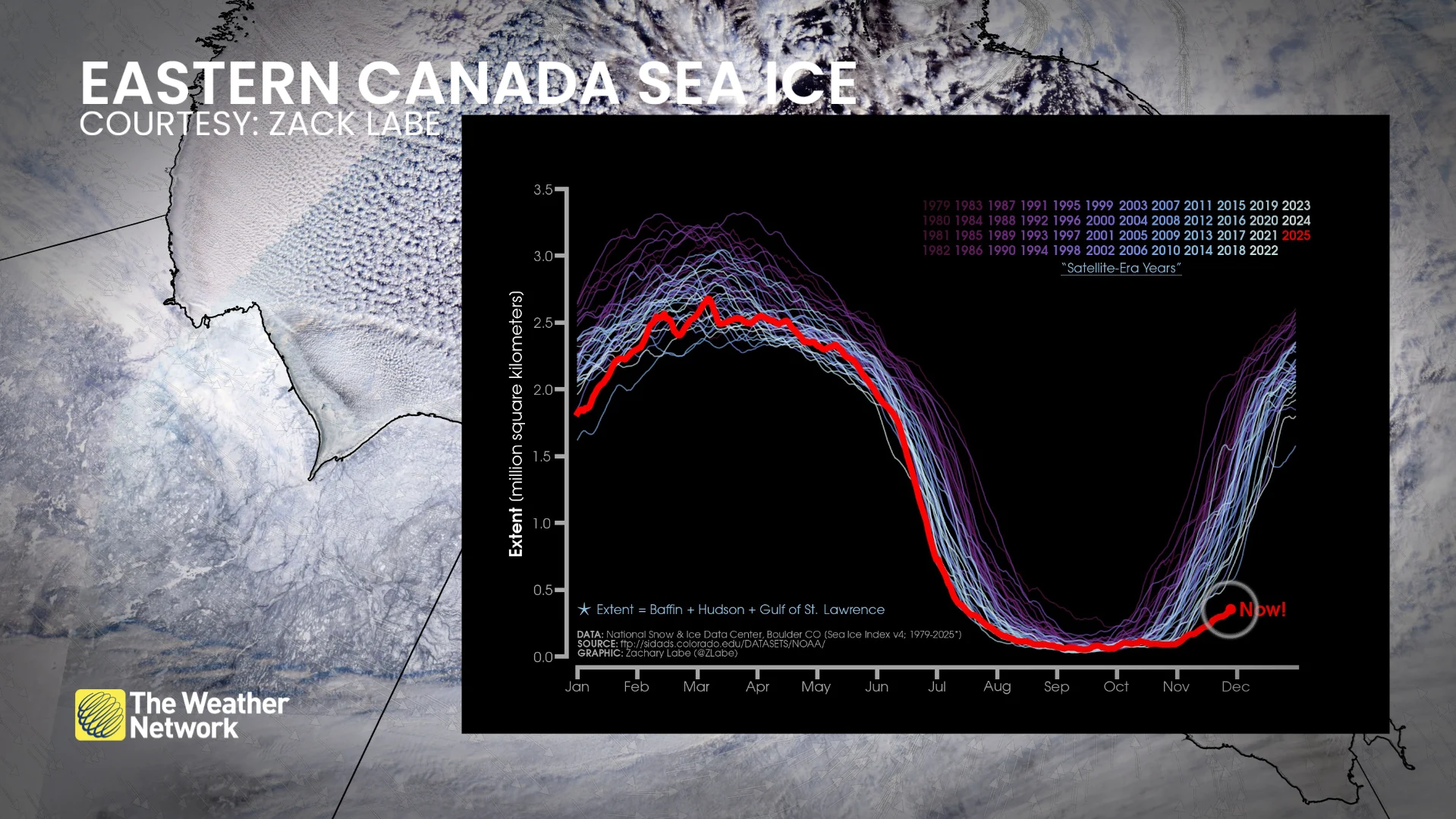
Sea ice across Northern Canada is seriously stunted, with regions including Baffin Bay, Hudson Bay and the Gulf of St. Lawrence recording all-time, minimum ice cover territory for this time of year.
With reliable satellite records dating back to 1979, 2025 stands out as a major outlier.
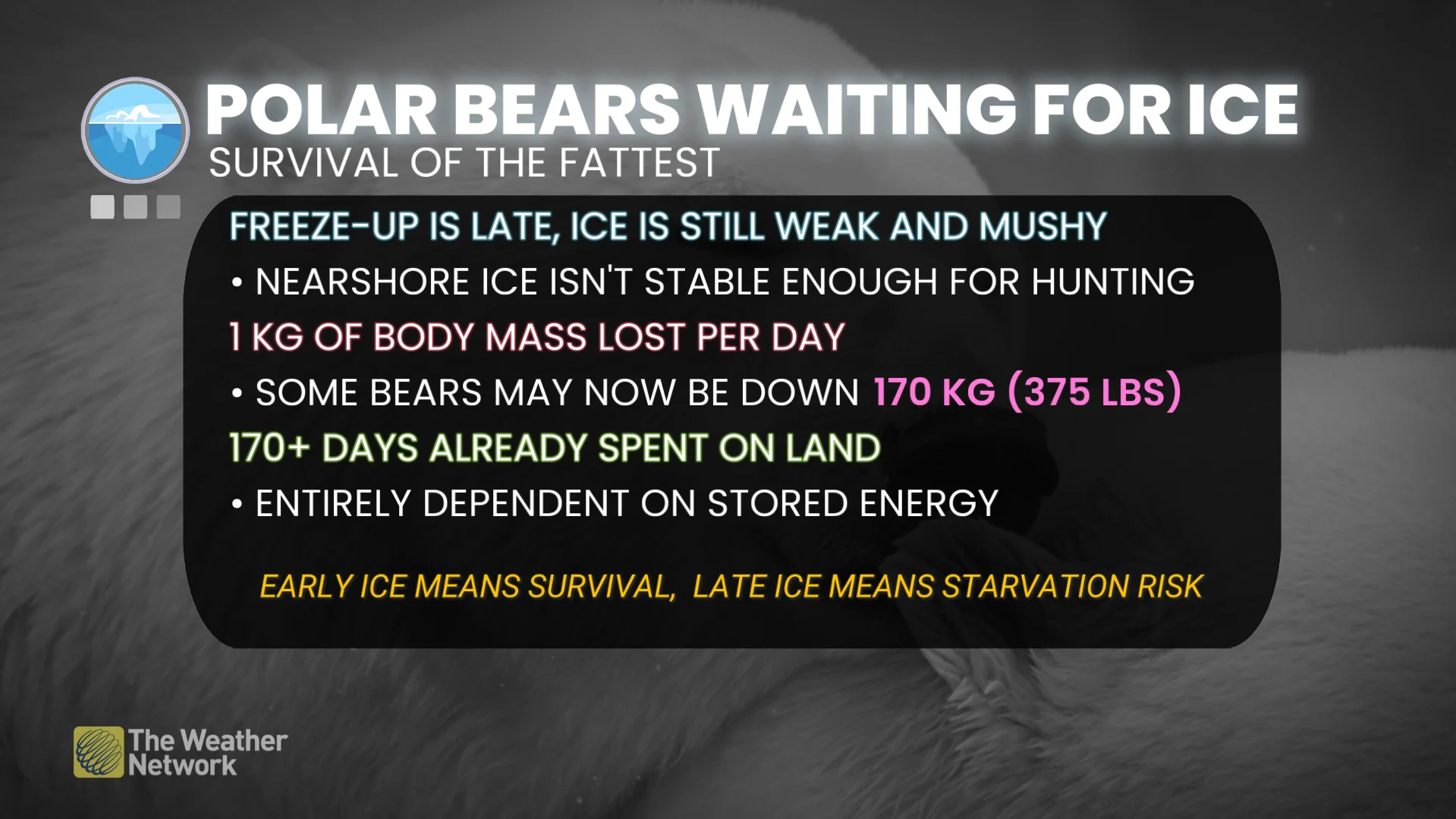
Without stable sea ice, polar bears cannot hunt seals, their primary food source. Nearshore ice is largely slushy, fragile, and unsafe for hunting.
What does it mean for polar bears?
Bears lose about 1 kilogram of body mass per day.
Some bears are now down approximately 170 kg (375 pounds).
They are now entirely dependent on stored fat.
That’s a heck of a fast.
The weather hero arrives
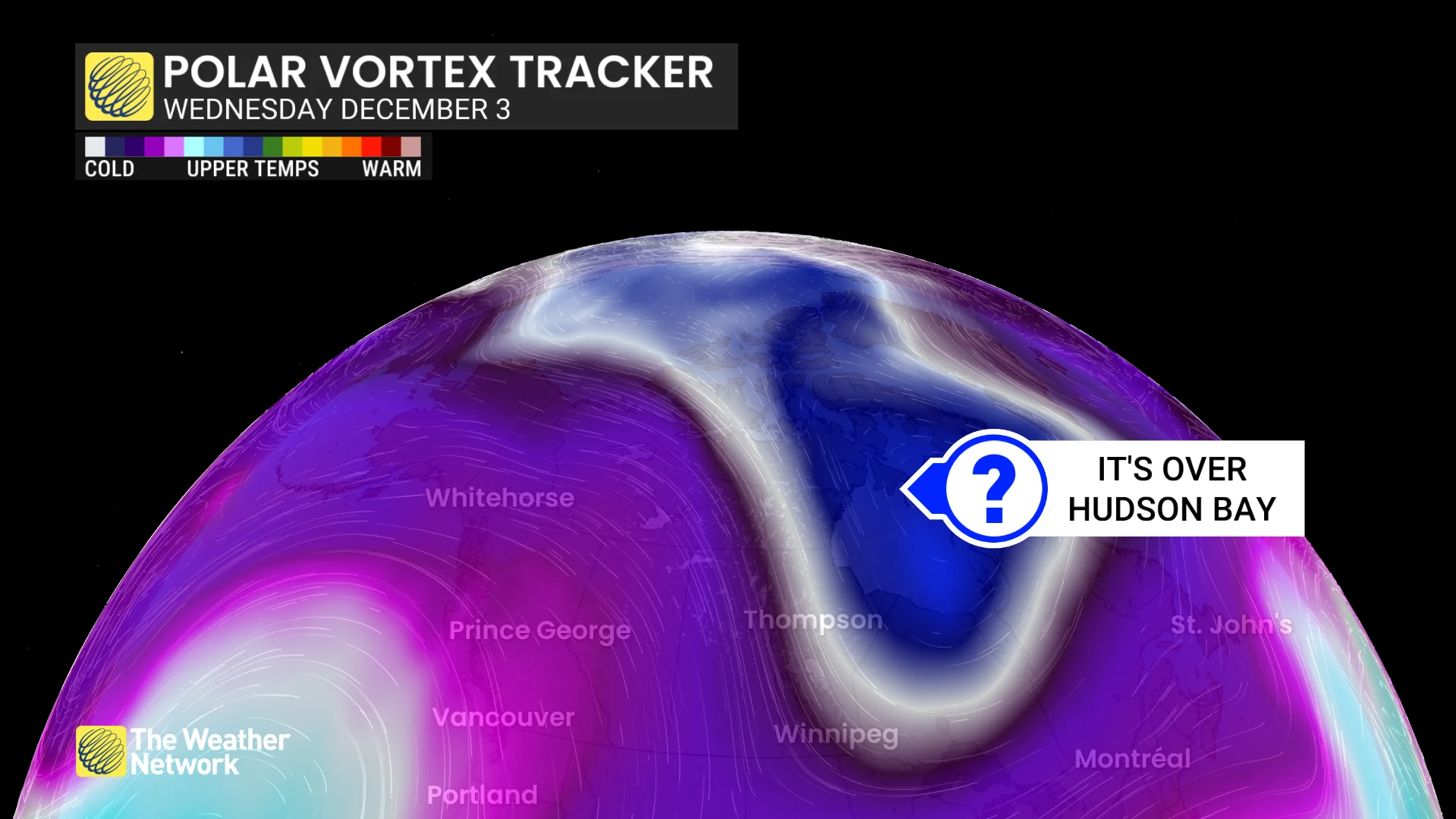
The polar vortex has finally shifted south and is now centred over Hudson Bay.
A deep Arctic air lobe stretches southeast throughout the weekend.
Warmth signal still lingers
Long-range guidance still highlights a stubborn, mild signal over eastern Nunavut.
A sustained, stable supply of Arctic air is critical for building thick, durable sea ice.
Early ice means survival, while late ice increases the risk of starvation.
After a record-warm November delayed Hudson Bay’s freeze-up into uncharted territory, the arrival of the polar vortex is more than a weather pattern. It may now determine the fate of the entire polar bear feeding season.
For the polar bears already deep into the fasting season, every day counts. It’s survival of the fattest.
Thumbnail contains an image from Pexels.