The bizarre stories behind the most unusual names on the map

What’s the backstory behind the names of places like Flin Flon, Hot Coffee, and Forget?
Weather is as much a study of maps as it is a study of our atmosphere. One of the bonuses of staring at so many maps is that you get to learn about every corner of the world.
Our planet is home to more than 8 billion people spread out across 195 countries and millions of individual municipalities. The name of every one of those villages, towns, and cities has its own interesting backstory.
But stare at the map long enough and you’ll find that there are some downright unusual place names out there.
DON’T MISS: Gulfs, lakes and cities: How places get their names
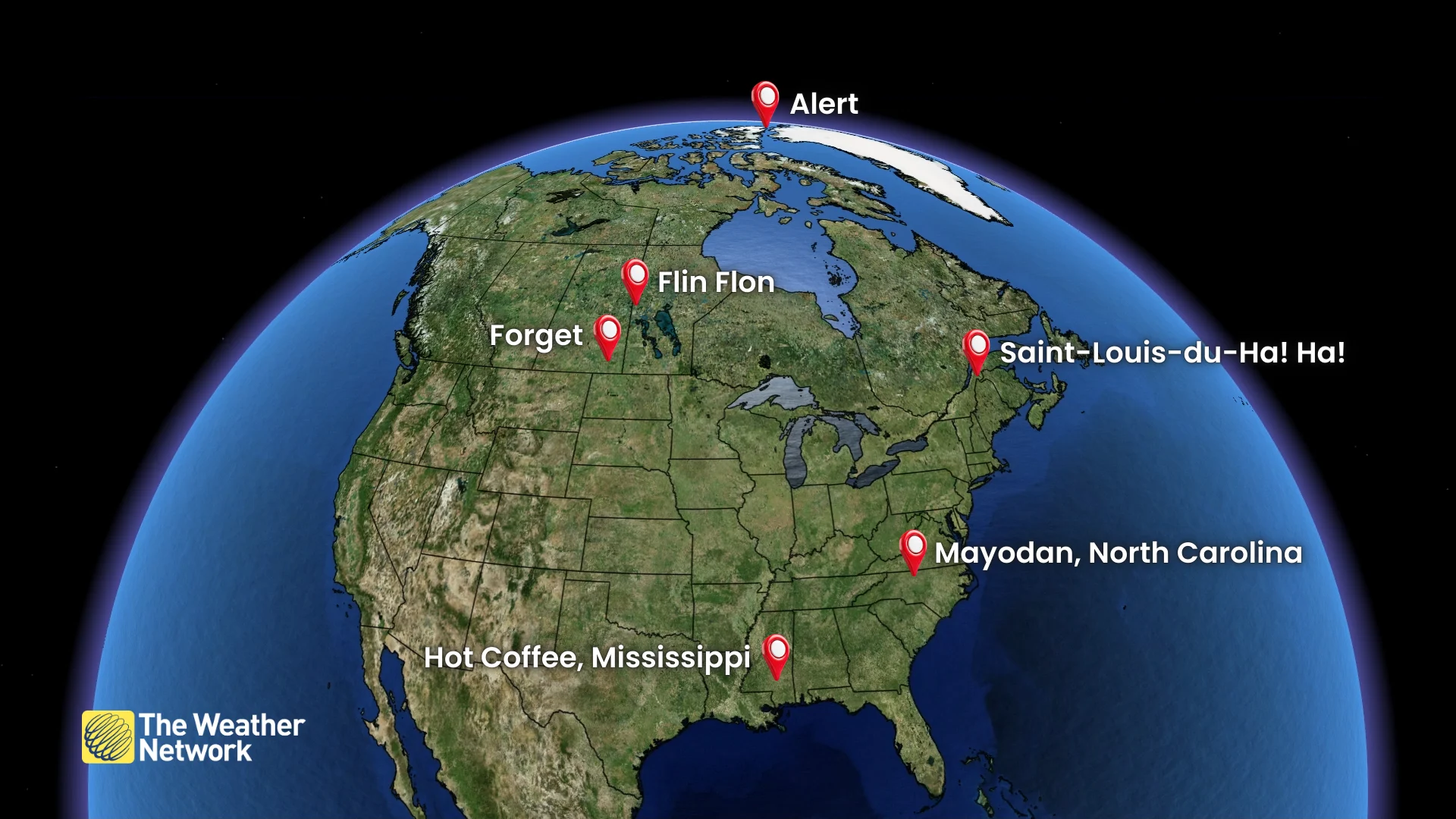
Flin Flon, Manitoba
Flin Flon was the main character in an early 20th century novel called "The Sunless City" by J.E. Preston-Muddock. How did the city become that character’s namesake? That half of the story isn’t so clear-cut.
The city’s official website relays two potential origin stories.
One line holds that prospectors found the novel on a trail leading into where the town stands today. The other possibility is that Canadian National Railways requested a name for the town and never heard back; exasperated by the lack of response, they simply decided to call the town Flin Flon.
Saint-Louis-du-Ha! Ha!, Quebec
Saint-Louis-du-Ha! Ha! is a rural community about 45 km southeast of Rivière-du-Loup in eastern Quebec.
According to Quebec’s Commission de toponymie, the first half of the name is likely an homage to Father Louis-Nicolas Bernier, a local religious leader in the late 1800s. But that’s not the part that raises questions.
The phrase “ha-ha,” as it turns out, is an archaic French word for a dead end or an unexpected obstacle. The commission’s official explanation says that early travellers came across nearby Lake Témiscouata and considered it a dead end, giving rise to one of the most unique place names in the world.
Forget, Saskatchewan
Head southeast out of Regina toward Carlyle and you’ll eventually see a sign or two for Forget.
RELATED: Why that wild weather map you saw on social media is probably bogus
Founded in the early 1900s, the village of Forget, Sask., took its name in honour of Amédée Emmanuel Forget, the first lieutenant governor of Saskatchewan. Bonus fact? A mountain in Alberta and a street in Regina also bear his name.
The state of Arkansas
Virginia and West Virginia. North Carolina and South Carolina. Their names and pronunciations are straightforward. So, what’s the deal with Kansas and Arkansas?
A fledgling United States bought both Kansas and Arkansas in the Louisiana Purchase of 1803, practically doubling the size of the young country.
RELATED: Are your maps accurate? How these tools can struggle to capture our world
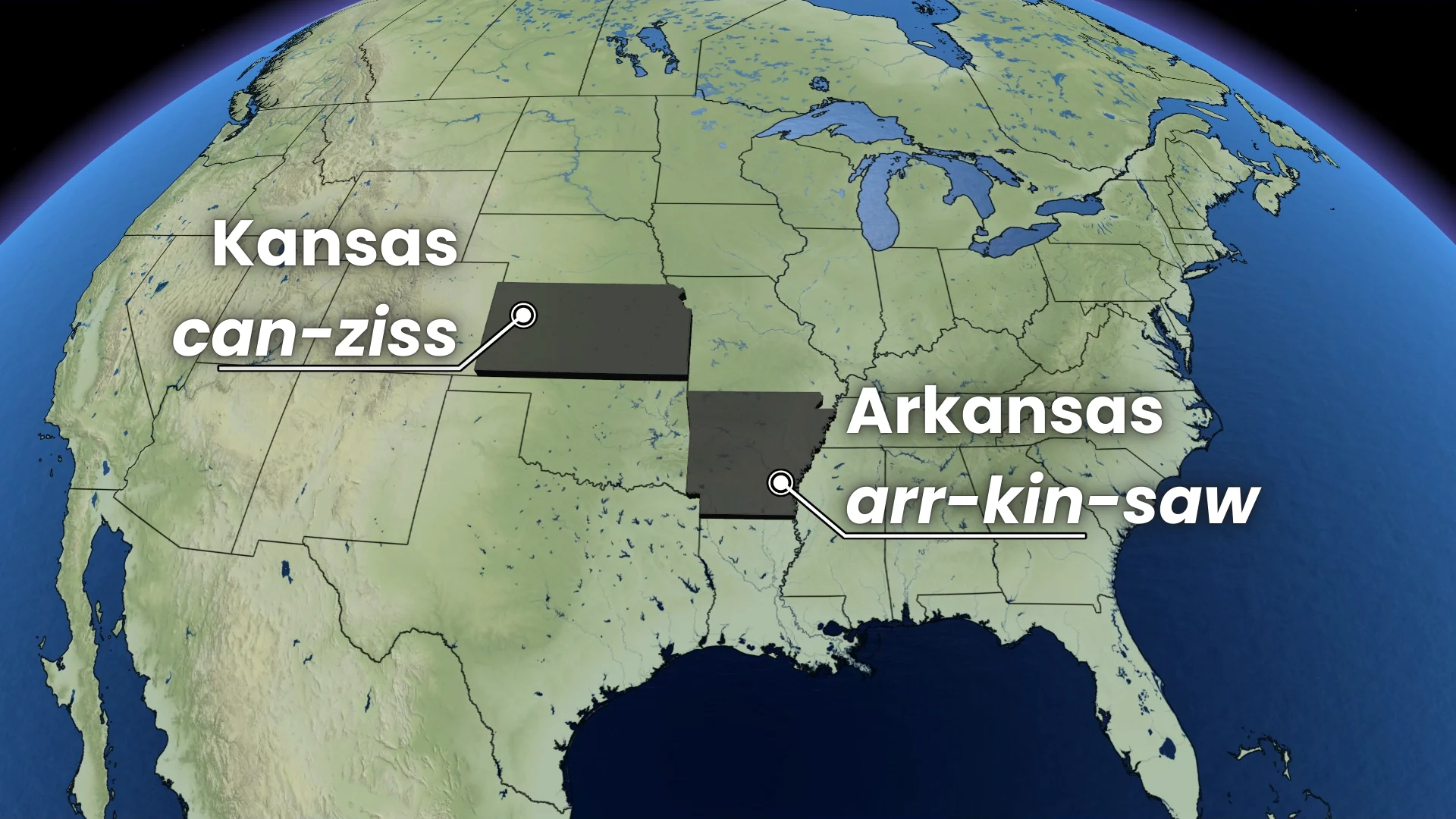
Kansas is pronounced can-ziss. Arkansas is pronounced arr-kin-saw. Both of the eventual states took their names from the Algonquian word for the Indigenous people who lived in the region. The differing pronunciations can trip up even the most ardent cartophile.
But even the folks who live in Arkansas couldn’t agree on how to pronounce their own state’s name. Legislators passed a resolution in 1881 officially declaring that the final ‘s’ is silent, putting the debate to rest at home.
Disagreements still simmer today. After all, the Arkansas River is still pronounced ar-can-ziss in Kansas.
Alert, Nunavut
Alert, Nunavut, is the world’s northernmost place where people live year-round. While nobody resides there permanently, Canadian Forces Station Alert hosts a few dozen military personnel throughout the year.
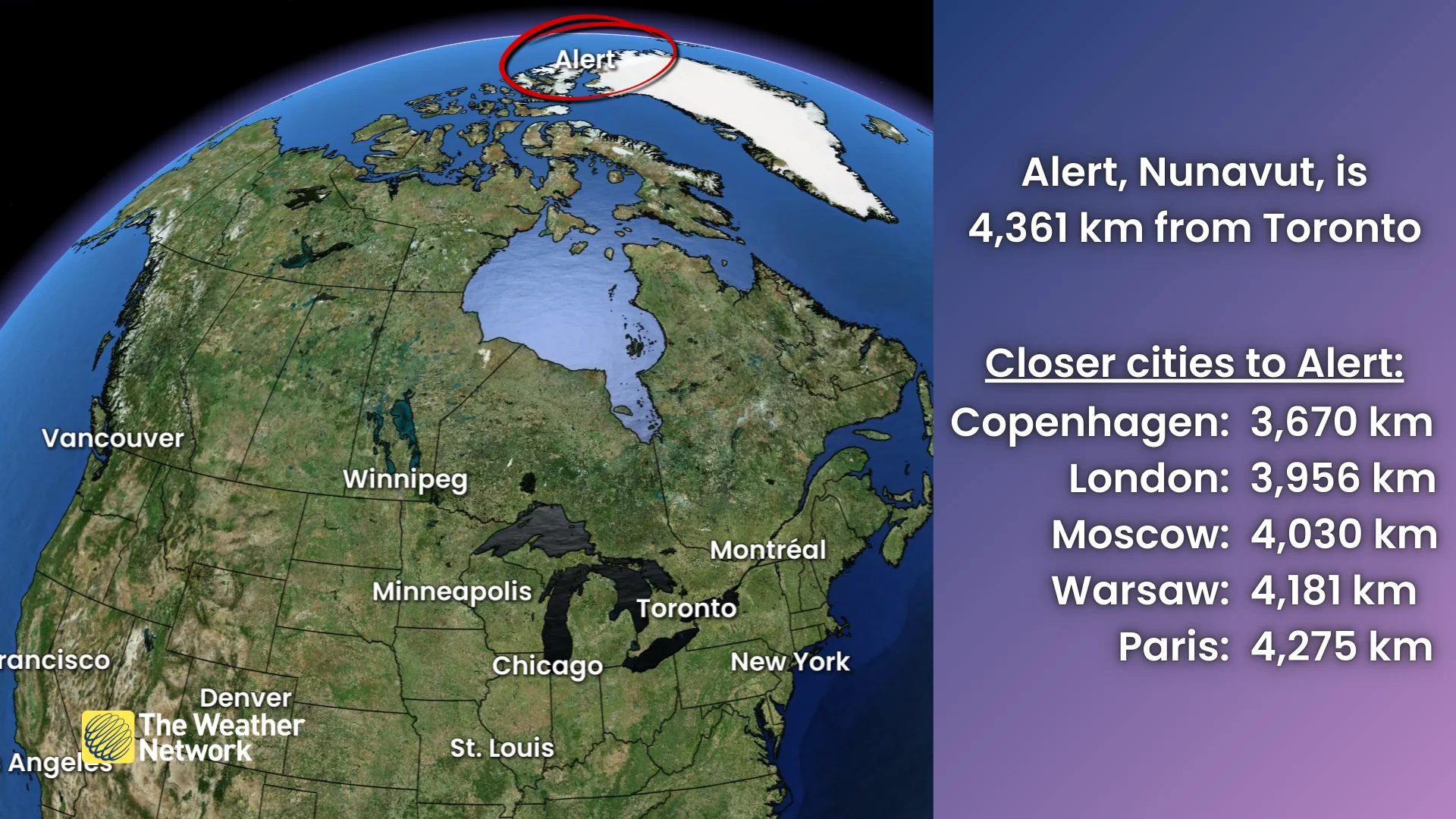
Located on the tip of Ellesmere Island just above the northern shores of Greenland, the folks who temporarily call Alert home are closer to the North Pole (830 km) than they are to Iqaluit (2,100 km). Alert is actually closer to the cities of London, Paris, and Moscow, than it is to Toronto.
Why is Alert called “Alert,” anyway? It’s not because the strategic location could provide early warning to any international shenanigans. The site earned its name from the HMS Alert, a British ship that spent the winter of 1875-76 hunkered down in a nearby bay.
Honourable mentions
The town of Hot Coffee had an early reputation for serving as a welcomed rest stop for travellers passing through southern Mississippi.
Multiple towns throughout Scandinavia are simply called Å, or sometimes Aa. No matter how it’s spelled, the name apparently stems from an old word for a small river.
Speaking of rivers, Mayodan, North Carolina, sits at the confluence of the Mayo River and Dan River north of the city of Greensboro. The savoury-sounding Mayo River was named in honour of William Mayo, who played a significant role in surveying the land now known as Virginia.