
Driving Through the Storm: The vehicle we trust for Canada’s variable winters

In Canada, the weather can change in an instant. For the team at The Weather Network, that's not a reason to turn back—it's the signal to go. Discover the vehicle that provides the confidence to drive into the heart of the storm.
Snow, rain, sleet, freezing rain, and more snow—this winter has delivered more thrills and chills to Canada than a roller coaster. The Weather Network’s Senior Meteorologist, Doug Gillham, PhD, did forecast this strong winter start across most of the country. And after an exceptionally mild fall, skeptics who doubted winter’s arrival were left with frostbite.
“The widespread cold start to winter was quite a contrast to what we have seen during the past few years, which featured widespread mild conditions for the beginning of winter,” explains Gillham. “We have not seen a widespread cold start to winter across Canada since 2017, but December that year was not quite as cold as what we saw across Canada during December 2025. We need to go back twelve years to December 2013 to find a colder start to winter across Canada.”
In many regions, Canadians have experienced rapidly changing conditions, with snowy weather shifting to rain or freezing rain, creating icy, slushy roads. “The jet stream pattern during December and the beginning of January was favourable for an active storm track, producing a steady supply of frigid Arctic air into Canada,” says Gillham. “However, ocean water temperatures across the North Pacific are much warmer than normal. As a result, when the frigid pattern temporarily broke down and allowed mild Pacific air to spread across North America, this air was much warmer than normal. As a result, many places turned warm enough for a thaw, including rain.”
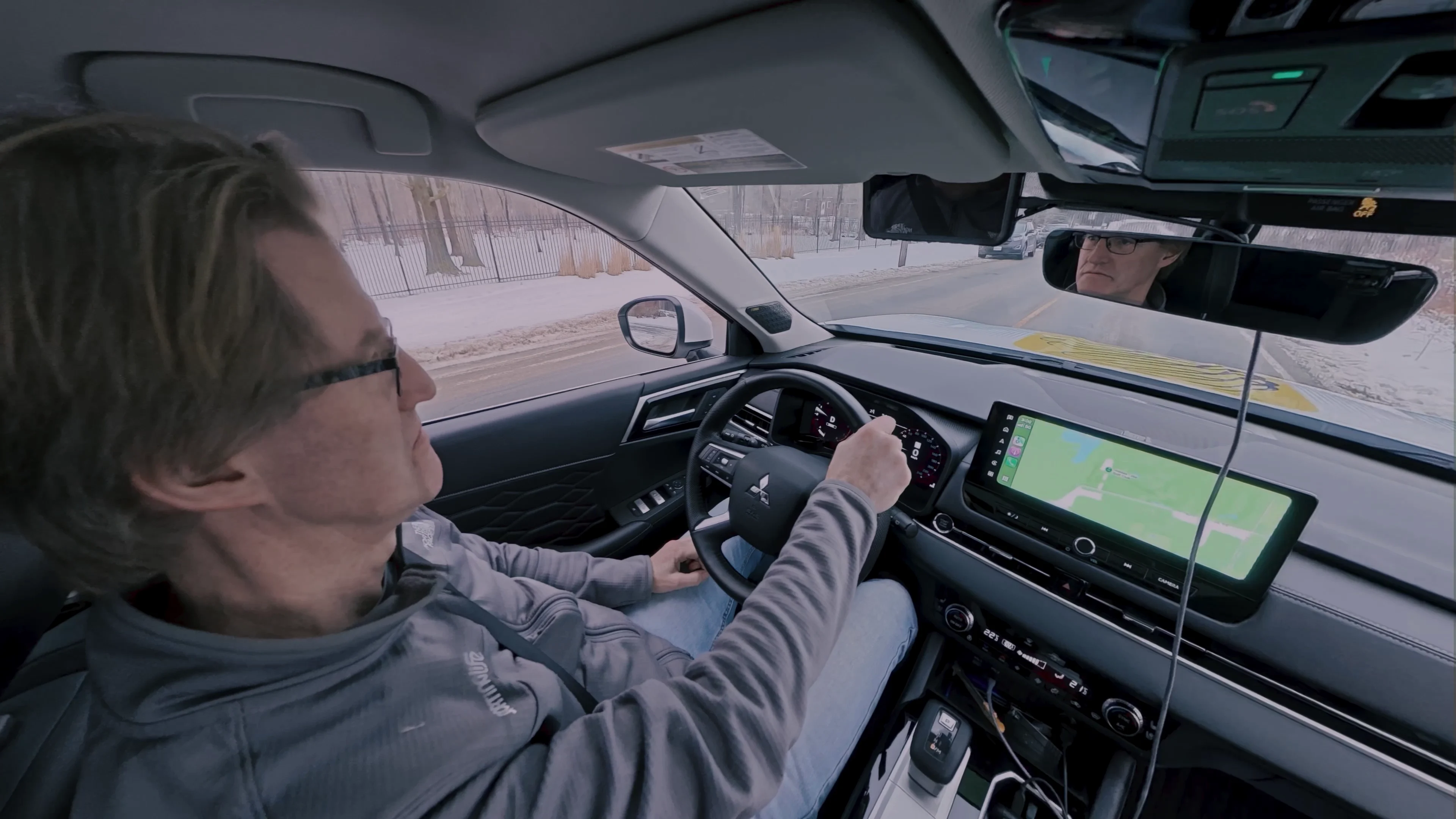
The Weather Network's Mark Robinson storm chasing in a Mitsubishi Outlander. (The Weather Network)
This is why having a reliable vehicle that can handle all winter conditions is crucial. There’s a reason why storm chaser Mark Robinson and The Weather Network Video Journalists opt for a Mitsubishi Outlander.
The Outlander features Super All-Wheel Control (S-AWC), a system designed to help the vehicle handle the challenging conditions of any Canadian winter. When paired with snow tires, S-AWC provides the control and safety that Canadians depend on when driving through tough winter terrains. S-AWC is an intelligent all-wheel-drive system that continuously collects sensor data and sends real-time instructions to each wheel. It helps ensure a smooth and secure drive.
Engaging snow mode on the Outlander with a simple twist of the dial improves traction and stability, especially on light-to-moderate snow-covered roads. The dashboard monitor clearly shows the current driving mode, ensuring you’re confident that the correct setting is active for the conditions. Given Canada’s varied winter weather—from coast to coast—the dial also allows switching to mud mode for better performance on muddy back roads or deep snow. This setting provides extra control, particularly when accelerating or turning from a standstill in deeper snow. When driving on dry roads, multiple modes adjust to your preferred driving style.

The Mitsubishi Outlander is the trusted vehicle of choice for The Weather Network's video journalists, no matter the weather. (The Weather Network)
Staying confident on the road is enhanced with modern comfort features, including available heated steering wheel and heated seats. The vehicle also comes with standard dual-zone automatic climate control, allowing the driver and passenger to set their preferred internal temperatures. Additionally, other trims offer this feature for the second row with three-zone automatic climate control for maximum cabin comfort.
When winter throws a mixed bag of conditions at Canadians, the Outlander goes above and beyond with features that elevate the vehicle’s performance. It offers heated power side-view mirrors. This feature boosts safety by clearing fog, rain, and ice from the mirrors' surfaces. Rain-sensing wipers are available on certain trims. The system uses a sensor to detect water and automatically adjusts the wiping speed from light drizzle to heavy downpour.
“Widespread colder-than-normal temperatures will return across much of Canada for the final ten to fourteen days of January. We expect the remainder of winter (February and March) to resemble what we saw in the first half of the season, with periods of widespread classic Canadian winter weather. However, winter will continue to be interrupted by much milder weather at times, including widespread thaws.”
Like roller coasters, this pattern will keep creating treacherous roads. As we saw in early January, winter’s first thaw left wet, slippery, slushy conditions that froze overnight and melted in the morning. Mother Nature throws so many curveballs this Canadian winter that the Toronto Blue Jays should invite her to spring training. Seasons like this winter remind us to stay cautious and adaptable on the road, ideally with a vehicle equipped for all situations.