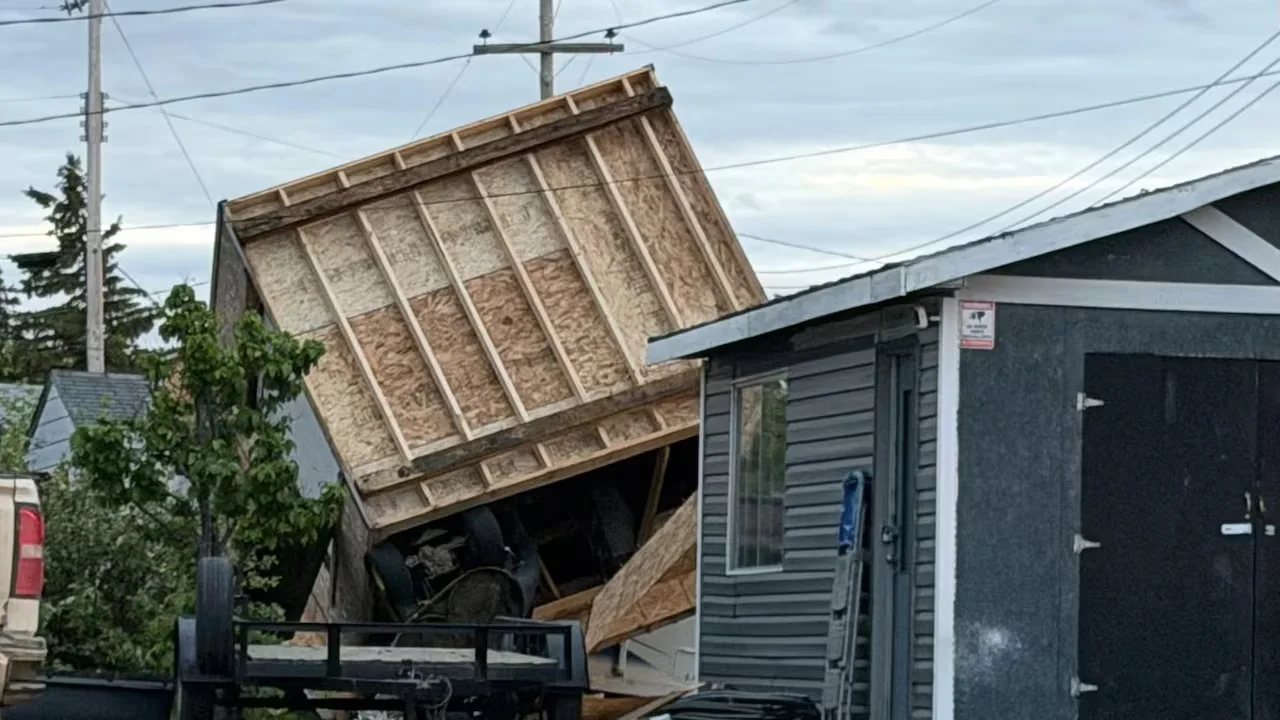
Tornado hits northwestern Alberta village, damages homes, businesses

A tornado touched down in northwestern Alberta last night, pulling trees from the earth and ripping roofs from homes in the village of Girouxville.
The tornado that passed through Monday evening caused extensive property damage and cut power to much of the village of 300 residents about 55 kilometres south of Peace River.
Marcel Moore, fire chief and director of emergency management for the Municipal District of Smoky River, said the winds moved in fast and fierce as a funnel cloud struck the community around 8 p.m.
Moore said he was at home when the sky darkened but he assumed it was just a typical summer thunderstorm. Within the hour, his crews were being deployed to survey the destruction.
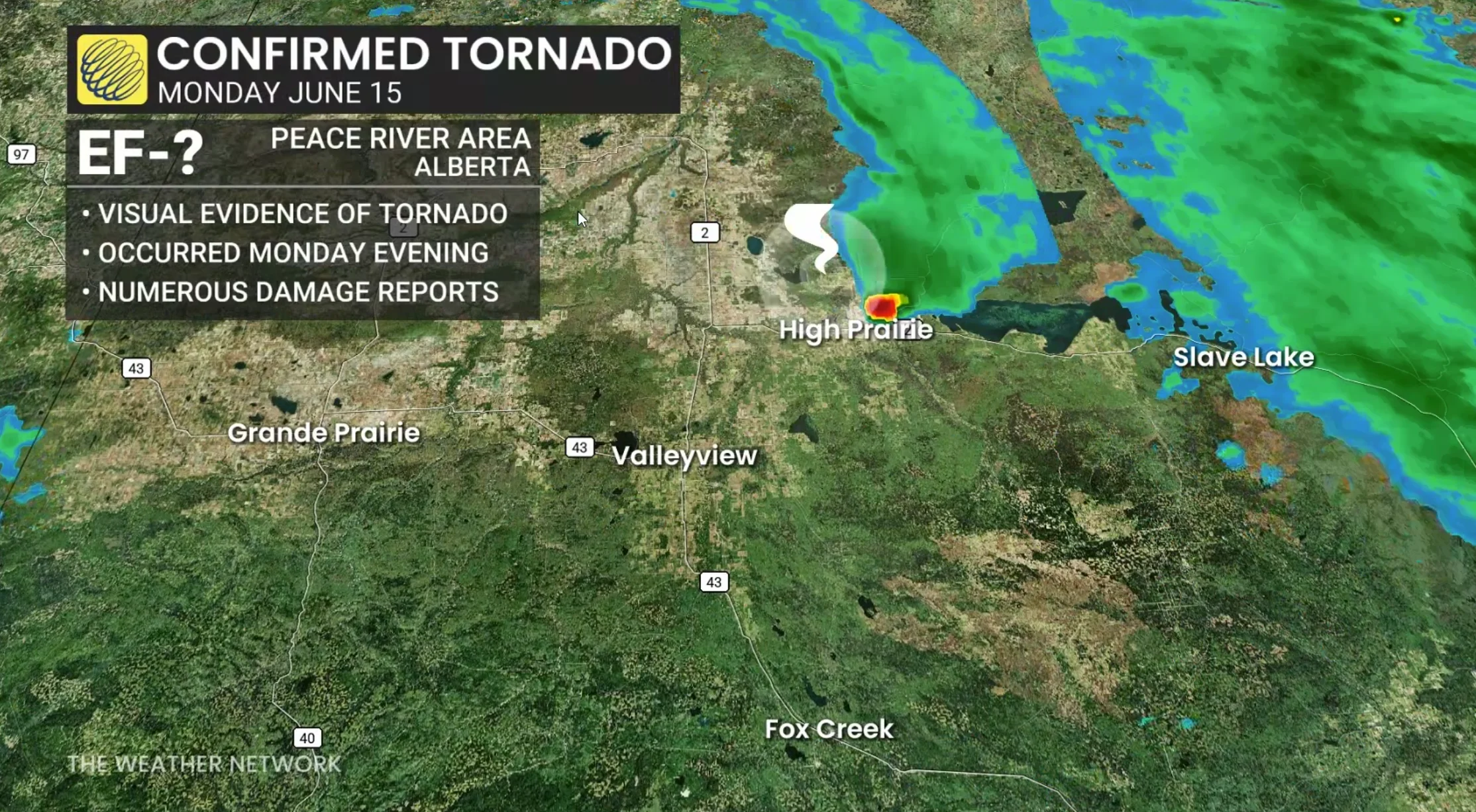
(The Weather Network)
CHECK OUT: Earwigs in your home? Here's how to get them out
“There was no forecasted warning, no alerts, no nothing,” Moore said. “All of a sudden it was just phone calls coming in that there was a tornado that touched down.”
Moore said many people were inside their homes watching the storm approach when their properties were struck by the funnel cloud.
He estimates more than a dozen properties sustained serious damage. Some of the homes are likely damaged beyond repair, he said.
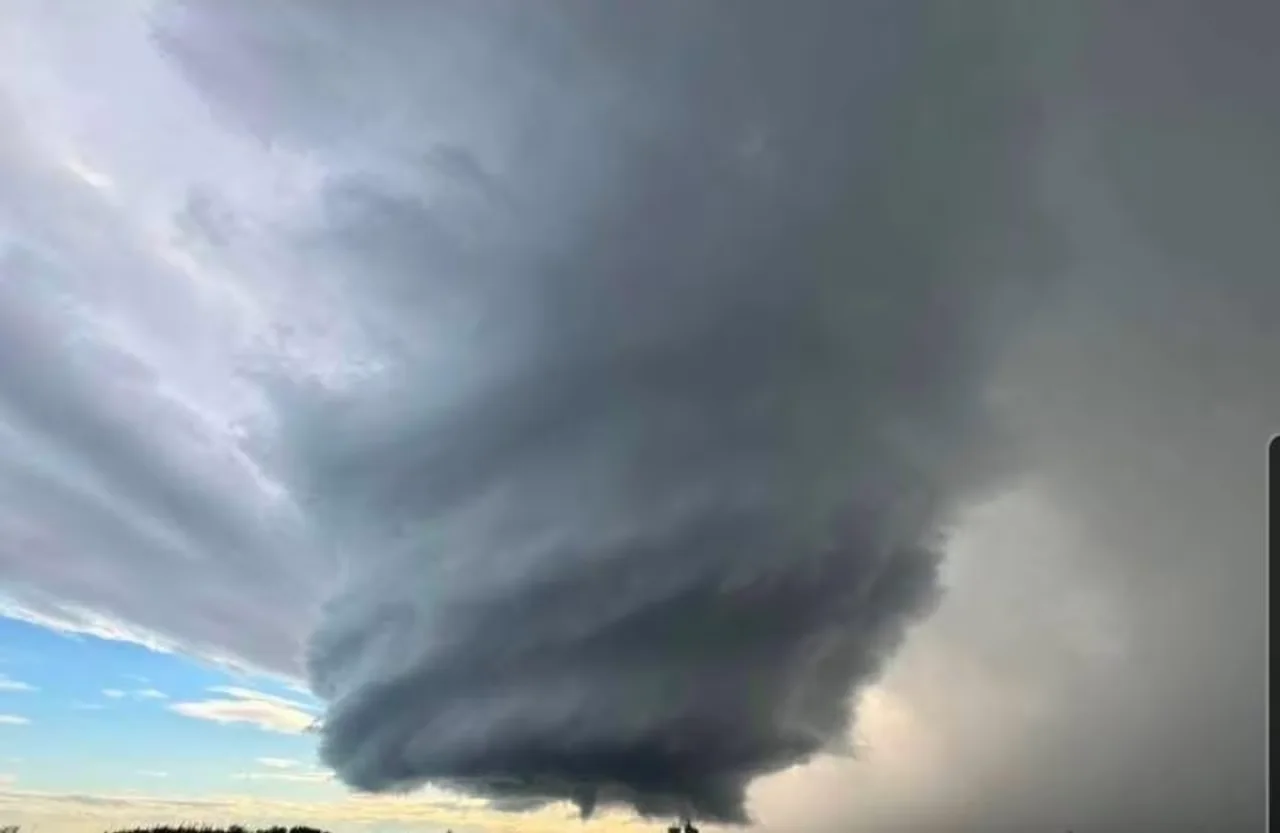
A large supercell formed on the horizon before a tornado touched down in Girouxville, Alta. Monday evening. This image, submitted by Brad Drouin, shows the tornado from a distance, outside the nearby community of Falher. (Brad Drouin)
Environment Canada confirms that no alarm or watch was issued before the tornado struck the townsite.
“It ripped off the roof of a house, and shifted another house off its pilings. It was a trailer. It threw lots of debris into power lines,” Moore said Tuesday.
“Power lines were down, and it uprooted some power poles. Of course, when all that happens, some debris hit some gas meters …. It did a great amount of damage in a quick amount of time.”
'Strain' on residents
Moore said no one was harmed although some residents sustained minor injuries during clean-up operations, which are moving quickly thanks to residents who were keen to pitch in, he said.
“Our major concern is always people, ensuring nobody is trapped and ensuring everybody is safe," he said.
DON'T MISS: Are your peonies covered in ants? Experts say that's great news
“Through it all, we found a few minor injuries, some lacerations, but other than that, it was actually probably one of the better outcomes you could have when one of those storms hit."
He said residents remain rattled at the force of the storm and, in some cases, the longer-term impact of structural damage to homes.
“You could see the strain on some of their faces, " he said.
In a statement issued Tuesday morning, the Northern Tornadoes Project confirmed that "at least one tornado" occurred in the Peace River area in northwestern Alberta on Monday evening.
Officials with NTP, a Western University project aimed at monitoring activity in Canada, said its team has fielded multiple reports of damage from the storm system and one of their survey teams will be deployed to the community to investigate.
Atypical supercell
Janelle Gergely, a meteorologist with Environment Canada, said tracking of the storm system did not suggest it would develop into a tornado.
She said the national weather agency is constantly watching for severe weather but sometimes, systems are unpredictable.
“The storm on radar was atypical,” she said. "If you look at the radar coverage, it doesn't look like a tornado was coming out of that storm…. But then that supercell strengthened.”
She said Environment Canada did not receive reports of the tornado until it had already passed through Girouxville and warnings were not issued until about an hour later in the evening.
“We were just expecting some kind of lower-risk thunderstorms in that area," she said.
LOOK: How honeybees stay in tune with thunderstorms
"To get a tornado, you need moisture, you need instability in your atmosphere and you need a good amount of wind shear. So all of those would have [come] together yesterday, and produced a supercell.”
Gergely said tornadoes in northern Alberta are not typical, noting storms usually form in the foothills in central Alberta before tracking eastward.
There have been at least 10 confirmed across the province so far this year, she added.
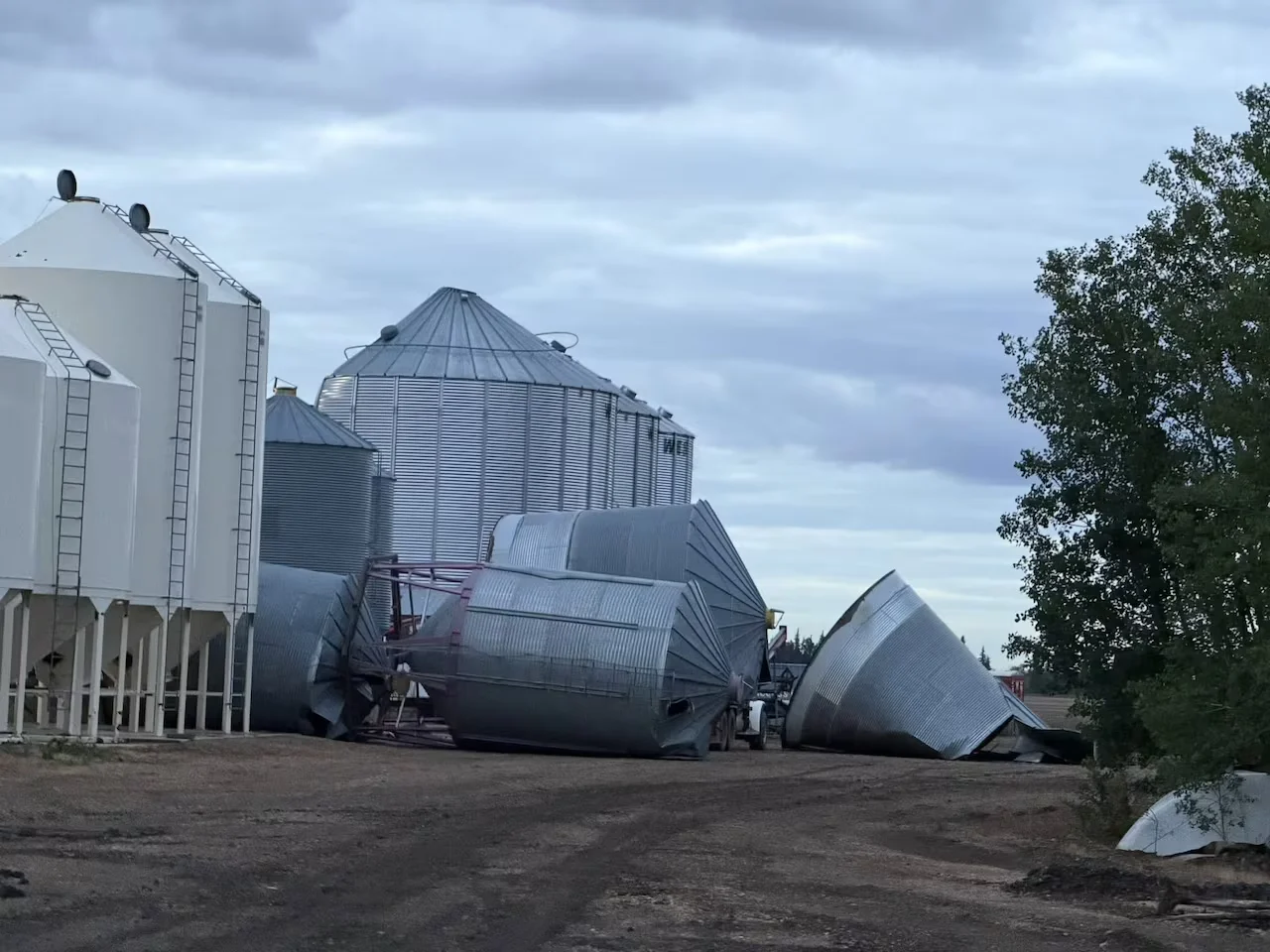
A grain elevator lies on the group after a supercell swept across northwestern Alberta Monday evening, causing extensive property damage. (Todd Loewen)
In an interview with CBC News on Tuesday morning, Girouxville's foreman, Ryley Mullen, said he heard about the tornado from his wife, who was at the community soccer field and saw the swirling mass of grey on the horizon.
"I was to the east and all the boys were out on the soccer field for soccer practice. And that was a bit of a panic," Mullen said.
"It [was] heading right towards us, like the funnel just kind of swirling around and went right overtop of us."
'It was incredible'
Mullen said the path of damage is narrow and random, with some of the most severely damaged properties standing next to buildings that were relatively untouched.
"There's trees down and there's lots of buildings with their shingles and parts of roofs missing," he said. "Sheds have been displaced on top of people’s roofs," he said. "I’ve never seen anything like it."
In a post on social media on Monday, Forestry Minister Todd Loewen, who is also the MLA for the region, said he was able to tour the village overnight and emergency crews are out while residents are cleaning and repairing what they can.
WATCH BELOW: Severe weather likely again on Tuesday
This article, originally published by CBC News on June 16, 2026, was written by Wallis Snowdon.