The world is officially in its water bankruptcy era

“This report tells an uncomfortable truth: many regions are living beyond their hydrological means."
A new report by the United Nations (UN) has declared the world is in an era of “global water bankruptcy,” arguing that current terminology fails to encapsulate irreversible water losses and some regions’ inability to climb back to historic baseline levels.
The 72-page report, published by the UN on Tuesday, was created in partnership with the Government of Canada and Global Affairs Canada. It is based on a paper that will appear in the journal Water Resources Management.
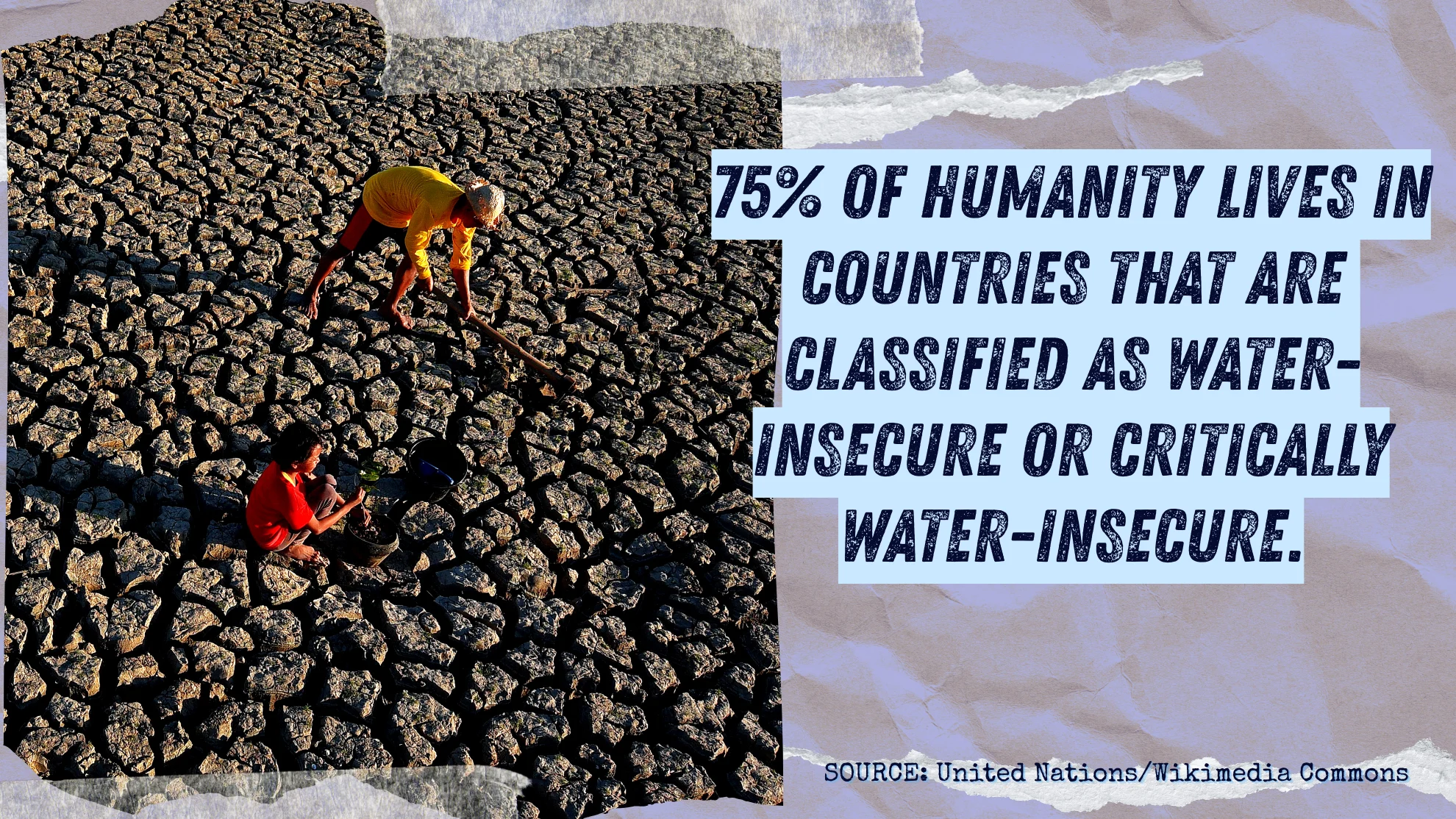
Photo: A father plants a tree as his son watches. (Artdevera17/Wikimedia Commons CC BY-SA 4.0)
What is water bankruptcy?
The paper defines water bankruptcy as:
Persistent over-withdrawal from surface and groundwater relative to renewable inflows and safe levels of depletion; and
The resulting irreversible or prohibitively costly loss of water-related natural capital.
The term replaces commonly-used langauge like “water stress,” which reflects reversible pressures, and “water crisis,” which refers to a temporary emergency.
The report points to several instances of irreversible damage, arguing the world has “moved beyond its safe planetary boundary.”
“Together with climate, biodiversity, and land systems, freshwater has been pushed outside its safe operating space,” an excerpt reads.
“The report concludes that the world is living beyond its hydrological means.”

Photo: A farmer surveys drought-stricken land.(Ranjith66/Wikimedia Commons CC BY-SA 4.0).
Report paints bleak picture
The Middle East and North Africa region, parts of South Asia, and the American Southwest are highlighted as particularly hard-hit.
Lead author Prof Kaveh Madani says that not every country is water bankrupt, but the planet is interconnected through migration and trade. Madani argues that enough critical systems have crossed into bankruptcy territory to pose a worldwide water risk.
At present, 2.2 billion people lack access to safely-managed drinking water. Climate change is worsening the situation by expediting glacial melt. It is also causing unstable weather patterns that put agricultural crops at risk, even here in Canada.

File photo sourced from Canva Pro.
Globally, about 50 per cent of domestic water use and over 40 per cent of irrigation water comes from groundwater, which means our drinking and food production water is heavily dependent on aquifers — but those aquifers are being depleted faster than they can refill.
The financial toll is immeasurable: Over 410 million hectares of wetlands have evaporated over the past 50 years. The loss of wetland services from these now dried-up swamps and marshes is valued at US$5.1 trillion. Meanwhile, the current annual cost of drought is estimated to be around US$307 billion.
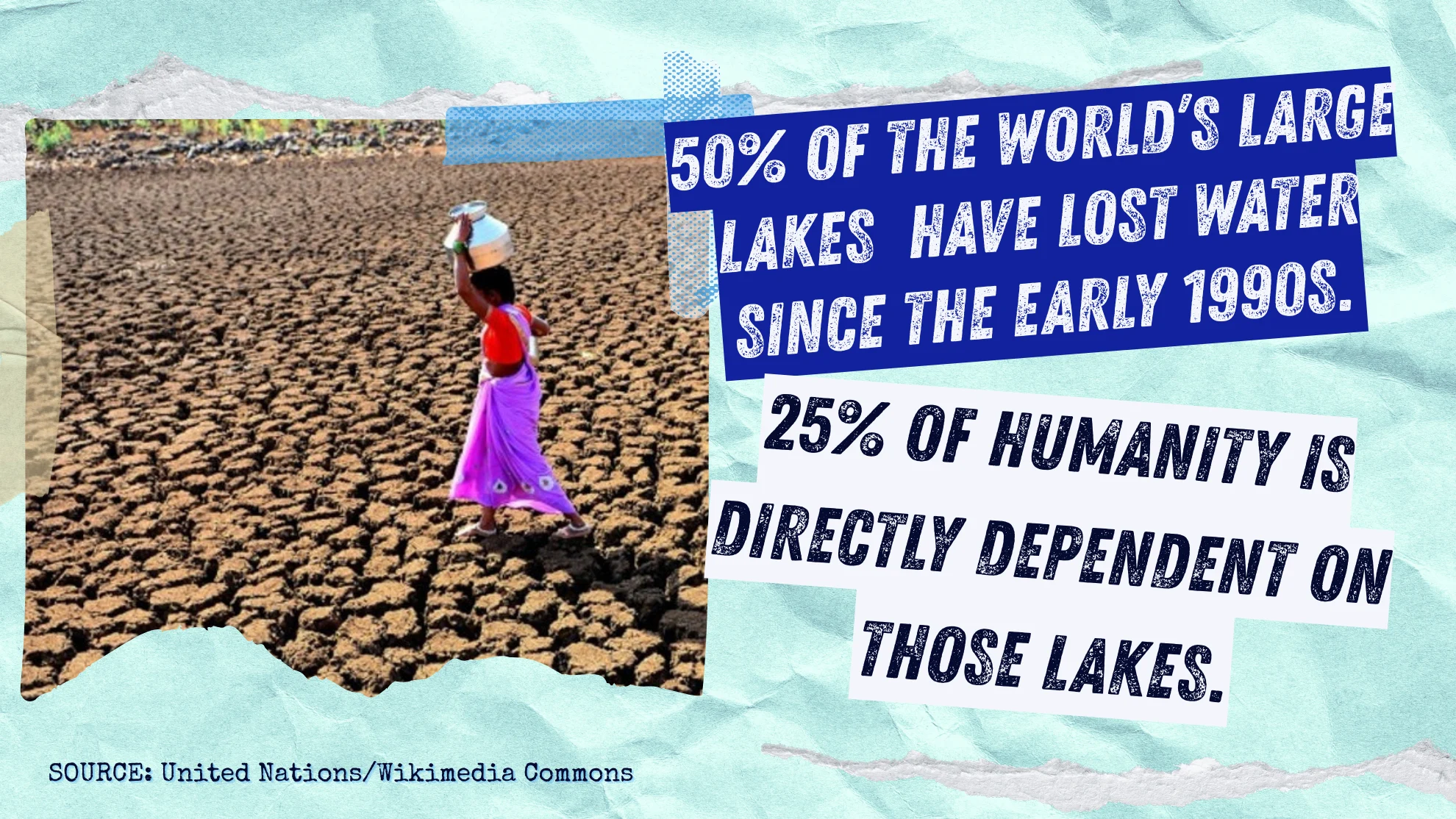
Photo: A woman carries a jug of water on parched ground. (Racaille1950/Wikimedia Commons CC BY-SA 4.0). All graphics arranged by Cheryl Santa Maria for The Weather Network.
Water conflicts have risen sharply since the 2010s, and several major rivers are drying up before reaching the sea. Even historically rainy places, like the UK, are at risk due to a reliance on water-dependent food imports.
“This report tells an uncomfortable truth: many regions are living beyond their hydrological means, and many critical water systems are already bankrupt,” Madani, who is the Director of the UN University’s Institute for Water, Environment and Health (UNU-INWEH), known as 'The UN’s Think Tank on Water,' says in a statement.
Floods not enough to alleviate stress
A flood may not be enough to bring a region out of water bankruptcy, Madani says, because long-term need could exceed the replenishment a severe storm brings.
“In that sense, water bankruptcy is not about how wet or dry a place looks, but about balance, accounting, and sustainability,” the UN says in a statement.
Water quality is another issue: Poor water quality reduces usable water, accelerating bankruptcy. Untreated wastewater, agricultural runoff, and industrial pollution degrade local waterways — equating to a water system that may look full on paper, but in reality, lacks water that is safe to support human or animal life.

Glacier: File photo sourced from Canva Pro.
A shift in water management is needed
The report calls on governments to shift from crisis mitigation to bankruptcy management, ending short-term, emergency-based processes.
In its place, officials must devise long-term strategies that reduce pollution, prevent further damage, and support people who have been uprooted due to water shortages.
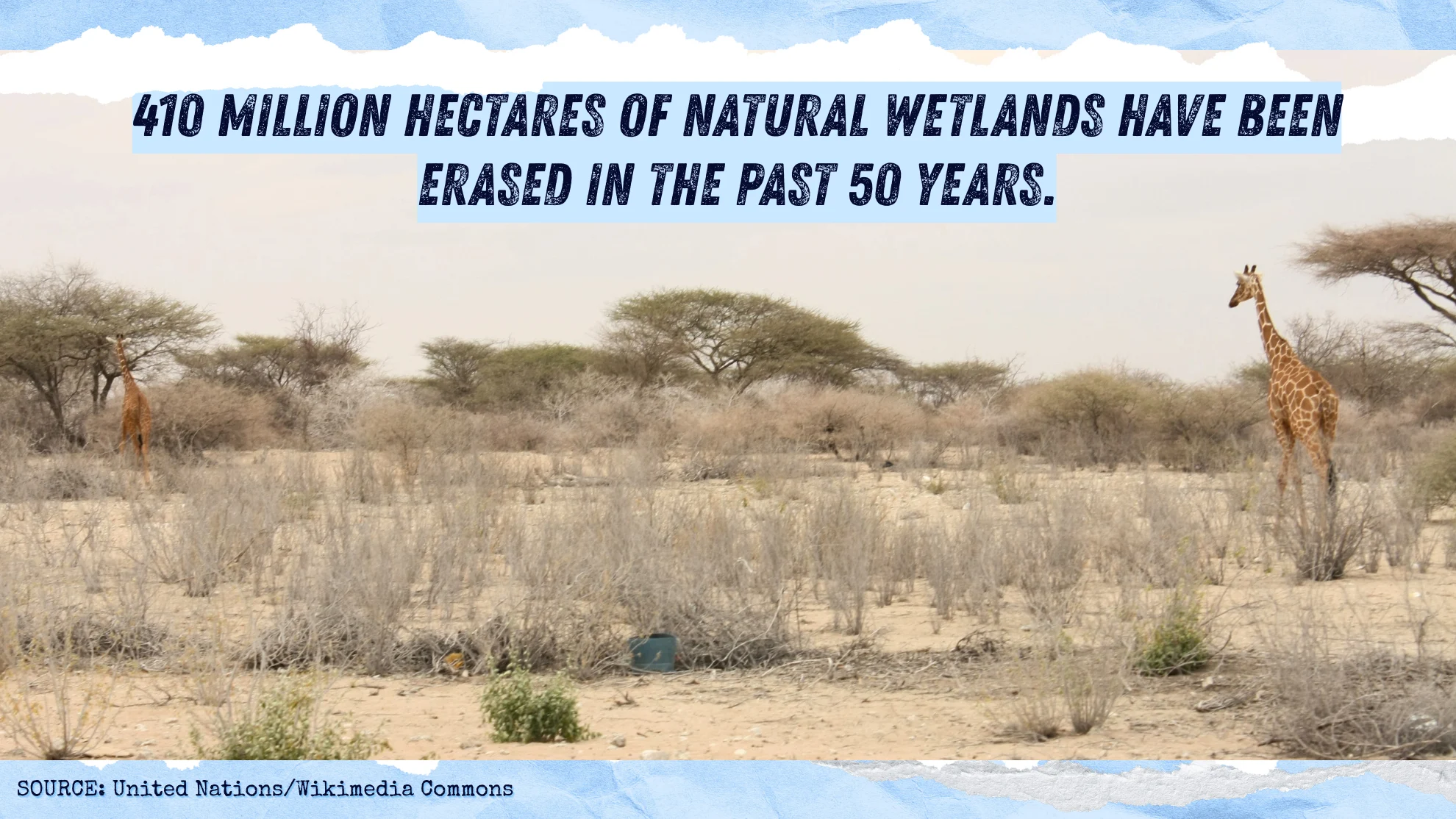
Photo: A 2011 photo of intense drought in Kulaley village, East Africa. (Oxfam East Africa/Wikimedia Commons CC BY-SA 2.0).
“Water can be a bridge in a fragmented world,” reads the report.
“Every country, sector, and community depends on freshwater. Investing in water bankruptcy management, therefore, becomes an investment in climate stability, biodiversity protection, land restoration, food security, employment, and social harmony. This shared reliance offers practical common ground for cooperation between North and South and across political divides within nations.”
The report was published ahead of a January 26 meeting in Dakar, Senegal, to plan for the preparation for the 2026 UN Water Conferece, scheduled to take place between December 2 and 4, 2026, in the United Arab Emirates.

File photo sourced from Canva Pro.
Header image: Created by Cheryl Santa Maria for The Weather Network using graphic elements from Canva Pro.
