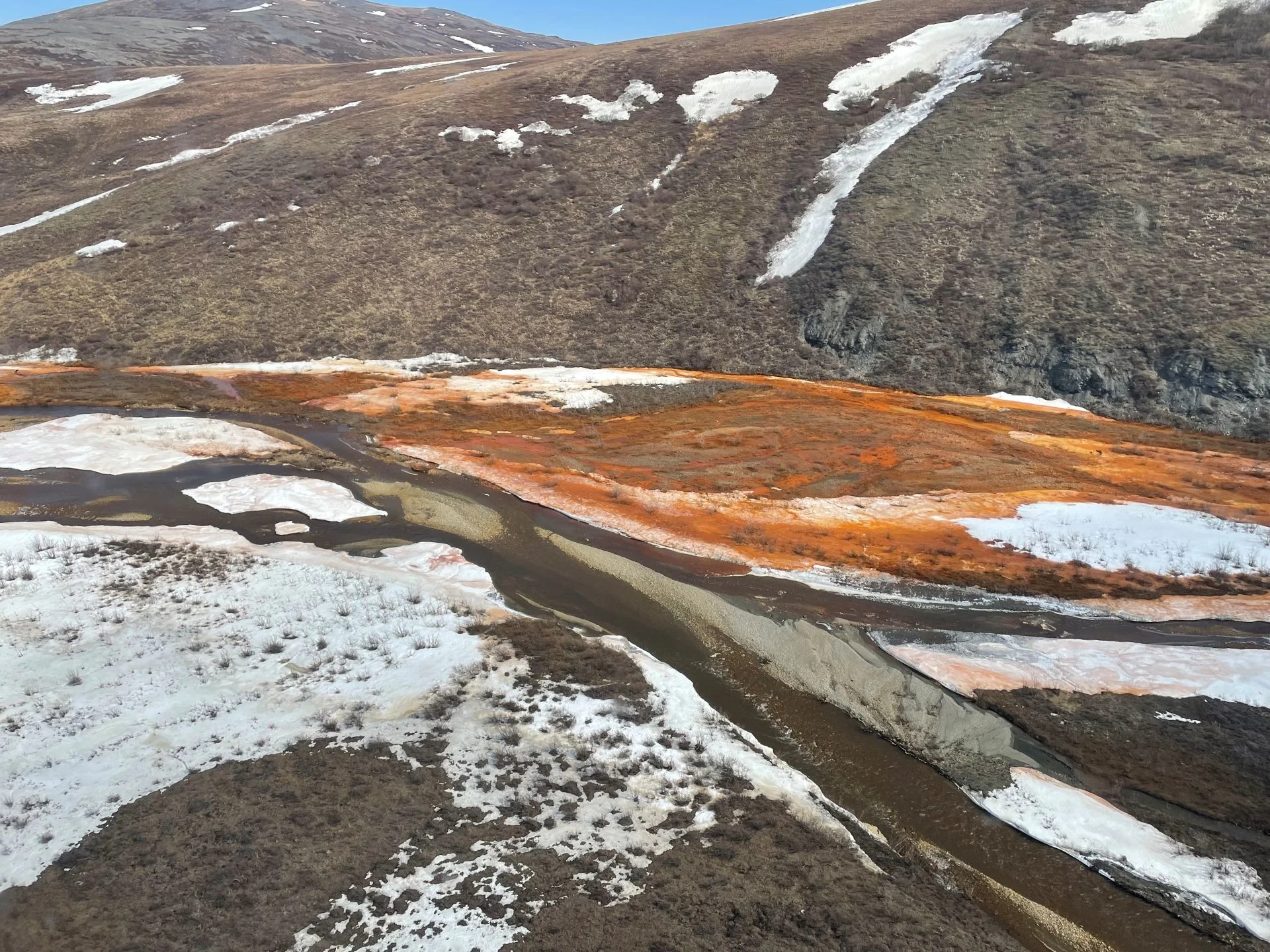
No, it isn't pop. Why some Arctic rivers are turning orange

The water in numerous Arctic rivers has undergone a mysterious colour transformation, taking on a rusty-orange tinge. Scientists may have figured out why the rivers are looking more like a soft drink
With the Arctic at the forefront of climate change, another unusual occurrence has been documented by researchers.
The appearance of rusty, orange-coloured water in some Arctic rivers has mystified many, but scientists may have uncovered the reason why they look like a flowing stream of flavoured pop. According to a new study from Umeå University, scientists discovered they can break down iron minerals more successfully than liquid water.
SEE ALSO: The Arctic is still warming, so why no new sea ice low record since 2012?
The findings of the analysis may solve the mystery of the water change, which is occurring amid the thawing of permafrost in the region, the study pinpointed. The examination showed that ice at -10 C releases more iron from common minerals than liquid water does at 4 C.
The findings were recently published in the scientific journal, PNAS.
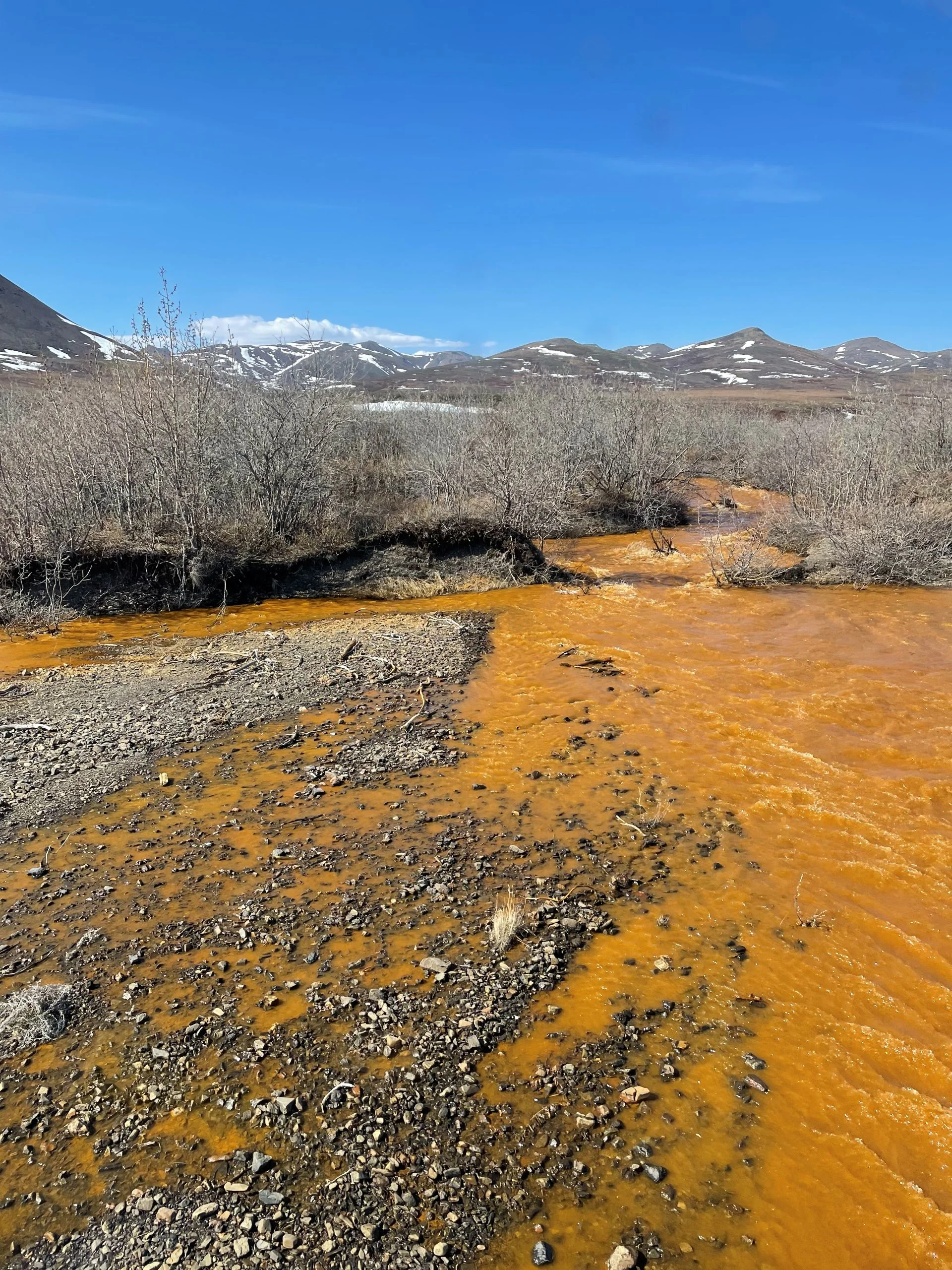
Orange water from a tributary of the Kugororuk River in Alaska. (Josh Koch/U.S. Geological Survey)
“It may sound counterintuitive, but ice is not a passive frozen block,” said Jean-François Boily, professor at Umeå University and co-author of the study, in a news release.
“Freezing creates microscopic pockets of liquid water between ice crystals. These act like chemical reactors, where compounds become concentrated and extremely acidic. This means they can react with iron minerals, even at temperatures as low as [-30 C].”
Ice's role with iron production
The study's authors noted that ice has a key role to play in improving soluble iron production in frozen landscapes.
"This research elucidates the effects of freezing temperature, salinity, organic loadings, and freeze-thaw cycling on the dissolution of an important nanomineral of the iron oxide family. It provides kinetic and mechanistic insights into ice-driven dissolution reactions in acidic ice, and it identifies conditions under which ice solubilizes more iron than in liquid water," the study says.
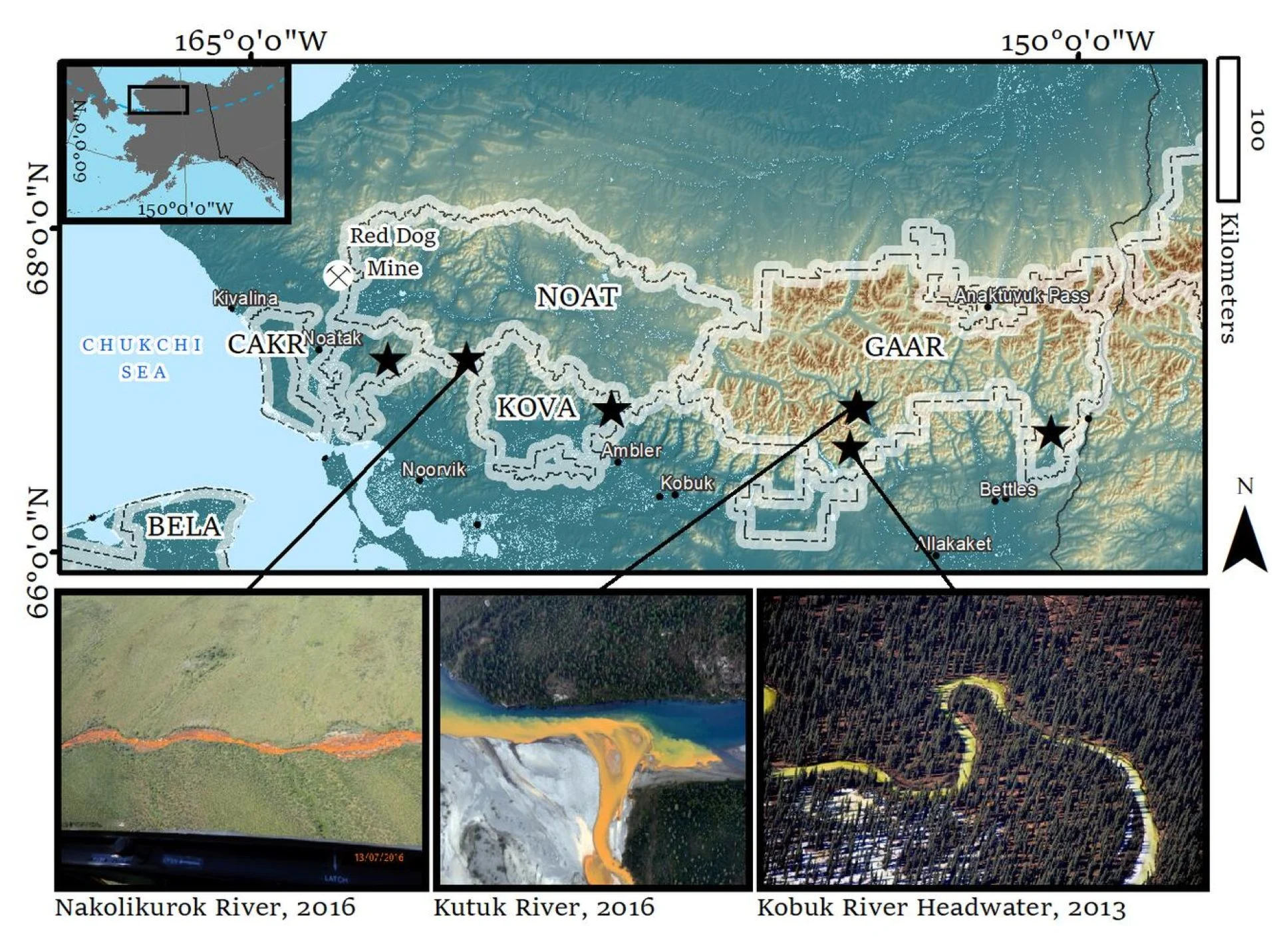
Map of orange stream observations across Arctic Inventory and Monitoring Network (ARCN) parks in northern Alaska. Picture inserts show aerial images of select iron-impacted, orange streams. (Map created by Carson Baughman/U.S. Geological Survey. Photos: Kenneth Hill/National Park Service)
In order to determine the ice-iron process, an examination of a widespread iron oxide mineral, goethite, was undertaken by researchers, according to the university. The review of goethite was paired with a naturally occurring organic acid using advanced microscopy and experiments.
The outcome of the analysis revealed that frequent freeze-thaw cycles make iron disintegrate more efficiently. And, as the ice freezes and thaws, organic compounds that were previously trapped in the ice are liberated, fuelling additional chemical reactions.
Salinity also plays an important role, according to the university, as "fresh and brackish water" increases dissolution, while sea water can suppress it.
Parts of Alaska seeing more orange streams
According to the U.S. Geological Survey (USGS), orange streams are "increasingly common" in the Brooks Range of northern Alaska.
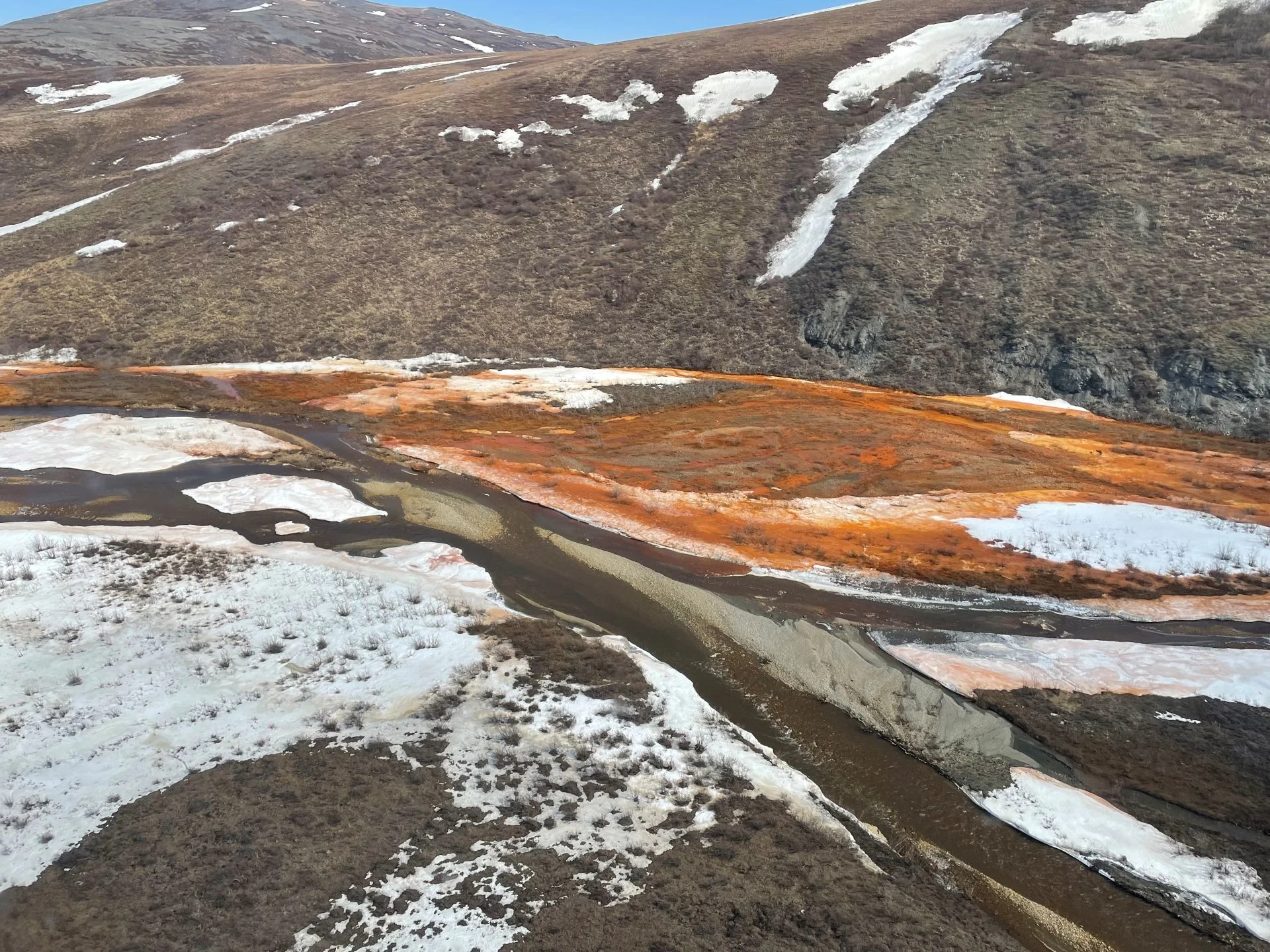
Brooks Range in northern Alaska. (Josh Koch/U.S. Geological Survey)
"The orange stream colour reflects oxidized iron, but also often indicates elevated, heavy metal concentrations," USGS said.
The government agency is documenting the happenings and timing of the onset of the colour changes in its own study, which is ongoing.
Through the examination, USGS hopes to test numerous theories on the cause of the colour change, and connection to warming and thawing landscapes. The other goal is to assess the consequences for downstream water quality and ecosystems.
What comes next?
Much of the study was primarily confined to acidic environments, including mine drainage sites, frozen dust in the atmosphere, acid sulfate soils along the Baltic Sea coast, or in any acidic frozen environment where iron minerals interact with organics, the university noted.
What will happen next in the Umeå University examination is to expand the inquiry, to determine if the results ring true for "for all iron-bearing ice." Research is still underway in the lab named after Jean-Francois Boily will be unveiled soon.
“As the climate warms, freeze-thaw cycles become more frequent,” said Angelo Pio Sebaaly, doctoral student and first author of the study, in the Umeå University news release. “Each cycle releases iron from soils and permafrost into the water. This can affect water quality and aquatic ecosystems across vast areas.”
WATCH: Cities are changing the way plants evolve, study
Thumbnail courtesy of Josh Koch/U.S. Geological Survey.
